
Quick Summary
- Quality traffic matters more than volume when the goal is to improve eCommerce sales and conversions.
- Simple checkout, strong product pages, and mobile optimization directly help increase online store sales.
- Customer trust grows faster with reviews, secure payments, and clear return and shipping policies.
- Smart marketing, retargeting, and CRO create steady eCommerce sales growth and better long-term revenue.
Many eCommerce stores face the same challenge: traffic is coming in, shoppers are browsing products, and carts are filling up, but sales are not growing as expected.
In many cases, the product is not the problem. Friction in the buying journey is. Issues such as slow page speed, weak product content, confusing navigation, or a complicated checkout can prevent customers from completing a purchase.
To improve eCommerce sales, focus on removing those barriers and making shopping easier at every step. Strong product pages, smooth navigation, trust signals, smart marketing, and a streamlined checkout can significantly improve conversions.
The right strategy does more than increase sales. It helps build trust, improve retention, and support long-term growth.
Why Your eCommerce Store Isn’t Getting Sales
Even with a visually stunning website, many stores struggle to get sales. This often happens because of a disconnect between what a store offers and how customers experience the buying journey. That friction reduces purchase intent and leads to lost conversions.
Reaching the Wrong Audience
An eStore might get plenty of visitors, but if they aren’t the people who actually need the product, they won’t buy. It happens when the marketing or SEO is too broad, attracting curious window shoppers rather than high-intent buyers.
Poor User Experience
If the website is hard to navigate, slow to load, or messy on a mobile screen, visitors will leave within seconds. A confusing layout creates mental friction, making it feel like too much work for the customer to find what they are looking for.
Lack of Trust
Online shoppers are naturally cautious and look for reasons to say no to a new brand. Without visible reviews, transparent return policies, or secure payment indicators, shoppers may hesitate to complete a purchase.
High Friction at Checkout
A complicated checkout process is the leading cause of abandoned carts. Forcing users to create an account, filling out endless forms, or hitting them with surprise shipping fees at the very last second often drives them away right before the finish line.
Poor Value Perception
When a customer can’t immediately see why your product is worth the price, they will go to a competitor. If your descriptions are vague or the pricing feels high without a clear explanation of the benefits, the customer won’t feel enough urge to hit the buy button.
eCommerce growth often comes from removing obstacles that prevent visitors from becoming buyers. Once friction points are identified, traffic is far more likely to convert into revenue. By identifying where the store is losing people, be it poor targeting, lack of trust, or a clunky checkout, the traffic can be converted into consistent revenue.
If you want to remove these friction points and want fast load speeds & seamless checkout experiences for your store, hire dedicated eCommerce developers today!
How to Improve eCommerce Sales?
As discussed earlier, to improve eCommerce sales, focus on two things: traffic and conversion. Below are some key strategies to increase sales of online stores.
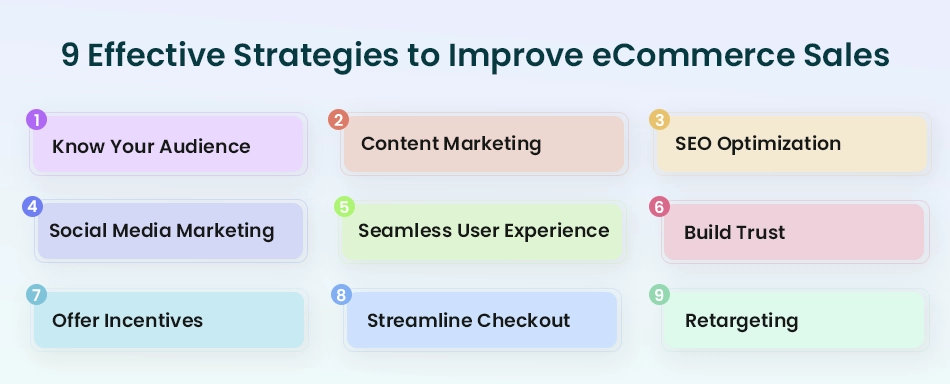
1. Know Your Audience
In eCommerce, it’s not enough to just have a general idea of who might buy your products. You need to create a detailed profile of your ideal customer with respect to their motivations, challenges, and online behavior.
- Demographics: Sure, age, gender, income, and location are a starting point. But dig deeper. Are you targeting young professionals, busy moms, or eco-conscious millennials? Understanding these details helps tailor your messaging and product offerings.
- What problems do your products solve? Identify the challenges your target audience faces and how your products provide solutions. Focus your messaging on how your offerings can improve their lives.
- What are their buying motivations? Are they driven by price, quality, brand reputation, or convenience? Understanding their motivations helps you craft compelling marketing messages and product presentations.
For the best results, you can use customer analytics, along with surveys and feedback forms, social media, and competitor analysis.
2. Content Marketing
You need to create valuable, informative content that resonates with your target audience and positions you as an authority in your niche. You can create and post blogs, informative guides and eBooks, video content, social media content.
Content marketing is important because it ensures targeted traffic generation, builds brand trust and authority, nurtures leads, and improves brand engagement. Here’s how you implement the best results.
- Focus on Quality: Prioritize creating high-quality, informative content that genuinely benefits your audience. Don’t just produce content for the sake of it.
- Content Consistency: Maintaining a consistent content creation schedule is key. This keeps your audience engaged and coming back for more.
- Content Promotion: Don’t just create content and hope people find it. Promote your content across various channels like social media, email marketing, and influencer partnerships.
- Track and Analyze: Use analytics tools to track your content’s performance and see what resonates with your audience. This allows you to refine your strategy and create even more effective content in the future.
These implementations will help attract a steady stream of qualified leads and build trust among the customers.
3. SEO Optimization
eCommerce SEO is all about getting noticed by potential customers actively searching for products like yours. Here’s how you optimize your eCommerce store with SEO:
- Keyword Research: The foundation of SEO lies in identifying relevant keywords with high search volume and low competition. These are the keywords potential customers use to search for products like yours.
- On-page Optimization: Optimize your website content and structure for your target keywords. This includes incorporating keywords strategically throughout your product pages, meta descriptions, and titles.
- Technical SEO: Ensure your website is technically sound and easy for search engines to crawl and index. This involves optimizing website speed, mobile-friendliness, and overall user experience.
- Backlinks: Backlinks are essentially links from other websites pointing to yours. Earning backlinks from high-authority websites in your niche signals trust and relevance to search engines. That boosts your ranking potential.
Make sure you prioritize user experience, focus on long-tail keywords, informative content, and stay updated on the latest trends.
4. Social Media Marketing
Social media marketing spreads brand awareness, engages customers, and drives sales. It’s about leveraging various social media platforms to connect with the target audience. Here’s how you craft a winning social media strategy:
- Identify Your Target Platforms: Not all social media platforms are created equal. Research where your target audience spends their time and focus on those channels.
- Create Engaging Content: Social media thrives on engaging content. Mix up your posts with a variety of formats like images, videos, stories, and live streams. Keep your content informative, entertaining, and visually appealing.
- Post Consistently: Maintaining a consistent posting schedule is key to staying top-of-mind with your audience. Develop a content calendar to plan your posts in advance and ensure a steady flow of engaging content.
- Track and Analyze: Monitor your social media performance using analytics tools. Track metrics like reach, engagement, and click-through rates to see what resonates with your audience and refine your strategy accordingly.
Be authentic, be responsive, and provide valuable content. That way, your brand will flourish in the social media landscape.
5. Seamless User Experience
You need to design an online store that feels effortless and intuitive to navigate. That fosters a smooth journey from browsing products to completing a purchase. Here’s how you create a seamless user experience:
- Clear and Simple Layout: Your website’s layout should be self-explanatory. Use clear menus, intuitive category breakdowns, and a logical information hierarchy to make it easy for users to find what they’re looking for.
- Search Functionality: A robust search bar is essential. Allow users to search by product name, category, brand, or even specific features. The search function should be easy to find and deliver accurate results quickly.
- Mobile-friendly Design: The majority of online shopping happens on mobile devices. Ensure your website is fully responsive and optimized for a flawless mobile experience with clear buttons, fast loading times, and easy product browsing.
- High-quality Product Images: Showcase your products with high-resolution, professional photos from multiple angles. Include zoom functionality to allow users to get a closer look at details.
- Detailed and Informative Descriptions: Provide clear and concise product descriptions that highlight key features, benefits, specifications, and materials. Avoid jargon and use language that your target audience understands.
- Customer Reviews and Ratings: Social proof is powerful. Showcase customer reviews and ratings to build trust and encourage buying decisions. Allow users to easily filter products based on ratings.
- Guest Checkout Option: Offer a guest checkout option alongside account creation. This caters to users who might not want to create an account for a single purchase and keeps the checkout process swift.
- Multiple Secure Payment Gateways: Provide a variety of payment gateways like credit cards, debit cards, and popular digital wallets. This caters to different customer preferences and fosters trust in the checkout process.
- Transparent Shipping Information: Clearly display shipping costs, estimated delivery times, and return policies upfront. Avoid hidden fees or unexpected surprises during checkout.
Continuously gather feedback, test, and refine to keep your website at the forefront of user-friendly eCommerce experiences. You can consult with our eCommerce development experts to create the best user experience.
6. Build Trust
Trust is the bridge that allows the customers to overcome hesitation and feel confident handing over their hard-earned money. Here’s how you build trust among your customers:
- Clear and Transparent Policies: Outline your return policy, shipping policy, and privacy policy clearly and easily accessible on your website. This transparency demonstrates your commitment to fair business practices and customer satisfaction.
- Positive Customer Reviews and Testimonials: Showcase genuine customer reviews and testimonials throughout your website. Positive feedback from satisfied customers builds trust and social proof, influencing buying decisions.
- Warranties and Guarantees: Offering warranties or guarantees on your products demonstrates confidence in their quality and reduces customer risk. This can be a powerful trust-building factor, especially for first-time buyers.
- Active Social Media Presence: Maintain an active social media presence where you engage with your audience, respond to comments and messages, and participate in relevant conversations. This two-way communication builds relationships and fosters trust.
- Use a CRM System to Build Relationships: Leveraging a CRM for your eCommerce store can help manage and nurture customer relationships effectively. With detailed customer insights, it becomes easier to personalize communication, resolve issues quickly, and deliver a more connected experience.
Building trust in your eCommerce store is an ongoing process. It requires consistent effort, transparency, and a commitment to providing exceptional customer service.
7. Offer Incentives
Incentives come in various forms, offering discounts, freebies, or rewards to entice website visitors and convert them into paying customers. Let’s take a look at the potential incentives:
- Discounts and Sales: Everyone loves a good deal. Offer strategic discounts, coupons, or limited-time sales to attract budget-conscious customers and clear out slow-moving inventory.
- Free Shipping: Free shipping is a major incentive in the eCommerce world. Consider offering free shipping above a certain order value to encourage customers to spend more and reach that threshold.
- Free Gifts with Purchase: A free gift with purchase adds perceived value and entices customers to finalize their purchase. This could be a free sample, a complementary product, or a travel-sized version of a popular item.
- Loyalty Programs: Reward your repeat customers with a loyalty program that offers points, exclusive discounts, or early access to new products. This incentivizes repeat business and fosters customer loyalty.
- Contests and Giveaways: Hosting contests or giveaways can generate excitement and attract new followers. Offer desirable products as prizes and require participants to follow your social media pages or subscribe to your newsletter to enter.
Remember, the key is to find the right balance between attracting new customers and rewarding your existing ones.
8. Streamline Checkout
A streamlined checkout process is the final hurdle you need to conquer to convert website visitors into paying customers. It’s about creating a frictionless experience from entering the billing info to confirming the order. That ensures a smooth and speedy journey to completion.
Here’s how you can streamline the checkout experience.
- Guest Checkout Option: Offer a guest checkout option alongside account creation. This caters to users who might not want to create an account for a single purchase and keeps the checkout process swift.
- Minimal Form Fields: Only ask for essential information needed to process the order. Avoid unnecessary fields that can slow down the checkout process.
- Pre-filled Forms (if applicable): If users have already created an account, pre-fill their billing and shipping information whenever possible. This saves them time and reduces the risk of errors during checkout.
- Multiple Secure Payment Gateways: Provide a variety of secure payment options like credit cards, debit cards, and popular digital wallets. This caters to different customer preferences and fosters trust in the checkout process.
- Clear Order Summary: Display a clear summary of the order throughout the checkout process. This allows users to review items, quantities, shipping costs, and totals before finalizing their purchase.
- Fast Loading Times: Ensure your checkout page loads quickly to avoid frustrating customers with delays. Optimize images and minimize page size for optimal performance.
- Mobile-friendly Optimization: A significant portion of online shopping happens on mobile devices. Ensure your checkout process is fully responsive and optimized for a smooth mobile experience.
To continuously refine and improve the checkout experience, you can do A/B testing along with using heatmaps and analytics. It translates into increased sales, happier customers, and a thriving eCommerce business.
9. Retargeting
Retargeting in eCommerce allows you to reconnect with site visitors who have already shown interest in your products but haven’t yet converted into a sale. When used with the best digital marketing strategies, it can be excellent for sales and revenue improvements.
Here’s how retargeting works:
- Tracking Pixels: A tiny piece of code placed on your website tracks visitor behavior. When a user visits a specific page or takes a particular action (like adding an item to their cart), the pixel anonymously collects data.
- Building Your Audience: The collected data is used to create a retargeting audience pool. This pool includes website visitors who fit specific criteria, such as those who viewed a particular product category or abandoned their cart at checkout.
- Targeted Ad Delivery: Partnering with retargeting platforms allows you to display targeted ads to your audience pool across various websites they frequent. These ads can showcase the products they viewed, highlight special offers, or simply remind them of your brand.
When done right, retargeting can be excellent for maximizing your site traffic and turn the window-shoppers into loyal customers.
These strategies help you attract qualified traffic, build credibility, and improve conversion rates — ultimately driving sustainable growth for your eCommerce business. For B2C brands, success depends heavily on delivering intuitive user experiences, scalable infrastructure, and high engagement, which is why professional B2C eCommerce development services focus on usability, performance, and customer retention.
Common Mistakes That Hurt eCommerce Sales
Many online stores focus on adding products or increasing ad spend, while overlooking issues already hurting conversions on the website. Fixing those mistakes is often one of the fastest ways to improve performance. Fixing these common problems is one of the fastest ways to improve eCommerce sales and create a better shopping experience.
Ignoring Mobile Optimization
Most customers now shop on their phones. If the website loads slowly, buttons are hard to tap, or pages do not fit properly on small screens, visitors leave quickly. A mobile-friendly store helps increase online sales and keeps users engaged.
Poor Product Pages
Since shoppers cannot physically examine products online, product pages need to answer questions clearly. Detailed descriptions, strong visuals, specifications, and supporting information reduce doubt and improve buying confidence.
Complicated Checkout Process
A long checkout process is one of the biggest reasons for cart abandonment. Too many form fields, forced account creation, hidden charges, or limited payment options can cause customers to leave at the final step. Simple checkout flows support better eCommerce conversion optimization.
Lack of Trust Signals
People do not buy from stores they do not trust. Missing reviews, unclear return policies, a lack of secure payment signs, and poor customer support create hesitation. Trust signals are essential for boosting eCommerce sales and increasing repeat purchases.
Weak Marketing Strategy
Running random ads without understanding the audience wastes both time and money. A strong plan should include SEO, email marketing, retargeting, and social media that bring the right visitors. Smart marketing strategies consistently increase eCommerce sales.
Small mistakes often lead to significant losses in sales. Fixing these areas improves customer confidence, reduces drop-offs, and supports long-term eCommerce sales growth.
Conclusion
Growing an online store is not only about getting more visitors. Real results come from bringing the right audience, building trust, and making the buying journey simple from start to finish. Detailed product pages, smooth checkout, mobile-friendly design, smart pricing, and clear customer communication work together to improve eCommerce sales.
Long-term success also depends on avoiding common mistakes that hurt conversions. Poor mobile experience & marketing, a lack of trust signals, and complicated checkout steps can push customers away, even when the product is good.
The right eCommerce sales strategies focus on solving these problems early, helping businesses increase online store sales, improve customer loyalty, and build steady revenue growth.
FAQs on Improving eCommerce Sales
1. How can I encourage repeat business from my customers?

Building customer loyalty is essential for long-term success. Here are some ways to keep customers coming back
- Provide excellent customer service to ensure a positive shopping experience
- Offer loyalty programs or exclusive deals for returning customers
- Retarget website visitors who haven’t converted yet to remind them about your brand and encourage future purchases.
2. What are some common mistakes I should avoid in eCommerce?
Here are some mistakes to avoid
- Offering a poor user experience with a confusing website or slow loading times
- Not having a clear and transparent return policy
- Failing to provide excellent customer service.
- Ignoring mobile optimization in today’s mobile-first world.
3. Should I offer frequent discounts and promotions?
Discounts and promotions can be effective for attracting new customers and boosting sales during slow periods. However, overuse of discounts can erode brand value and customer perception.Consider offering limited-time promotions or tiered discounts based on purchase quantity.