

 STARTER
 STANDARD
 ENTERPRISE
Progressive Web App (PWA) Storefronts
Give shoppers native app features on any headless frontend, built faster at lower cost. Your PWA loads fast on weak networks, reaches more buyers, and lifts engagement, sales, and loyalty.

BrainSpate builds custom headless storefronts designed to convert and scale. Faster pages keep shoppers engaged, and frontend updates without backend disruption let your team launch new promotions and features quickly. Our dedicated developers follow a milestone-based process and provide full code ownership after launch.


As a leading Headless Commerce development company in the USA, BrainSpate covers every stage of a headless build, from architecture planning and frontend development to integrations, replatforming, and ongoing support.

Our team structures your store so one commerce backend can power your website, app, and future channels.

Your backend stays untouched while we build fast, conversion-focused storefronts on modern frameworks.

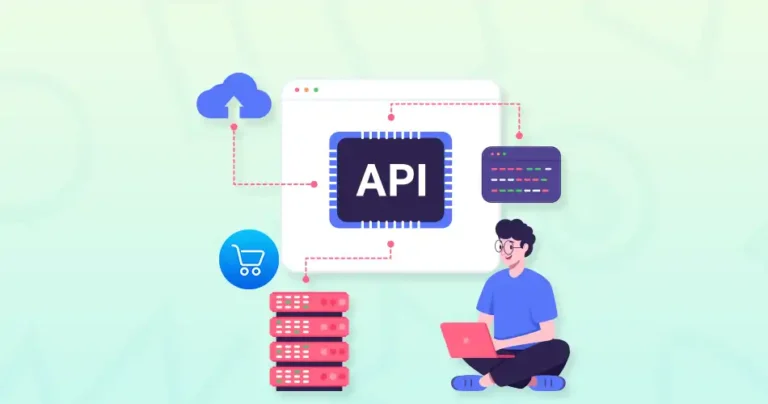
Through secure APIs, our developers link your storefront to your CMS, ERP, CRM, PIM, and payment systems.

Our team moves your store to headless and carries over products, customer data, URLs, and search rankings.

After we connect a headless CMS, your content team manages landing pages, campaigns, and editorial experiences.

We sync products and stock from one system, giving shoppers the same details on every channel.

To raise your speed and Core Web Vitals scores, we fine-tune rendering, caching, APIs, and content delivery.

Before development starts, our consultants choose the right architecture and plan your migration path.

Manage your headless store operations with expert eCommerce maintenance and support after deployment.
BrainSpate excels in building fast and flexible online stores that give businesses the freedom to design and scale. We decouple the frontend from the backend to create more adaptable commerce experiences. With our eCommerce development capabilities, our experts deliver powerful headless solutions built around your business goals and future growth.
Separating the storefront from the commerce backend lets each layer change at its own pace. That gives your business room to redesign, connect new systems, and expand without major rebuilds.

Because the frontend runs independently, your store can use any layout or interaction your brand needs, free from theme and template limits.

One backend feeds your website, apps, marketplaces, and kiosks, which keeps product details and prices identical wherever customers shop.

Our developers fine-tune rendering, caching, and delivery on the decoupled frontend, helping pages load faster and pass Core Web Vitals checks.

APIs link your store to CMS, ERP, CRM, search, and payment tools, and each system can be added or replaced without affecting the others.

New storefronts and features plug into your existing backend, letting the business expand without rebuilding core commerce systems.

We pair a headless CMS with your storefront, placing guides and videos beside products to help shoppers make confident decisions.
We help you redefine the eCommerce experience and refine your sales channels for maximized brand visibility and ROI with our expert Headless eCommerce development services in the USA.
We offer various pricing packages tailored to different levels of Headless Commerce development needs.
10% Off
15% Off
Package Name |
|
|
|
|---|---|---|---|
Pricing | $800 / Month | $1,500 / Month | $2,700 / Month |
| Team Allocation | Pooled Developer | Semi-Dedicated Developer | Fully Dedicated Developer |
| Hours / Month | 40 | 80 | 160 |
| Website Maintenance | 5 Websites | 10 Websites | Unlimited Websites |
| Website Hosting Support |  | | |
| Design | Semi-Custom UI | Fully Custom UI/UX | Custom + UX Research |
| Mobile Optimization | | | |
| SEO Guidance |  | | |
| Third-Party Integrations | Basic Apps | ERP / CRM / API | Custom APIs |
| Performance Optimization | | | |
| Update Calls | Monthly | Weekly | Daily |
| Preferred Collaboration Tool | | | |
| Security Setup | Basic | Advanced | Enterprise-Grade |
| Best For | MVPs & Small Stores | Growing Brands | Large Enterprises |
Select the right engagement model for your headless eCommerce project based on its complexity, scope, timeline, and ongoing development needs.
This is the best-suited model for large and complex projects. Our developers fully adapt to your workflow, tools, time zone, and culture throughout the project.
Beyond the core build, BrainSpate adds capabilities that help your headless store load faster, personalize each visit, and release new features on your own schedule.
Give shoppers native app features on any headless frontend, built faster at lower cost. Your PWA loads fast on weak networks, reaches more buyers, and lifts engagement, sales, and loyalty.
Build your own tech stack with a separate tool for each feature. Our experts help you choose the best fit for every need, reducing vendor lock-in and speeding up launches and innovation.
Our developers build your store as separate services that scale and fail independently. This makes each part faster to build, fix, test, and manage, and easy to link with best-of-breed tools.
Through APIs, we link your future-ready store to real-time data tools. You gain insights for smarter decisions, while tailored offers elevate conversions and order value without slowing pages.
Our experts add features and UI/UX updates quickly, with low downtime. You can test changes in real time, respond to market trends ahead of rivals, and keep one unified experience.
Frontend
 React.js
 Next.js
 Vue.js
 Angular
Commerce Platforms
 Magento
 Shopify
 WooCommerce
 BigCommerce
APIs & Integration
 REST APIs
 GraphQLStorefront APIs
Backend
 Node.js
 Laravel
 Django
 PHP
Headless CMS
 Contentful
 Sanity
 Strapi
 WordPress
Database & Caching
 MySQL
 PostgreSQL
 MongoDB
 Redis
Cloud & Infrastructure
 AWS
 Azure
 Google Cloud
 DigitalOcean
Payments
Stripe PayPal
 Square
 Adyen
After a formal project kick-off call, we assess whether you are leaving a legacy system or starting fresh, then define the scope in a detailed SOW.
Our team picks a scalable, secure, and compatible tech stack, discloses third-party costs upfront, and sets up development and staging environments.
We build a robust backend (platform-based or microservices) and custom storefronts in milestones, with a demo call at each for your review and feedback.
We use APIs to connect your frontend, backend, and third-party systems. We run structured QA and staging validation, then test the store under real-world scenarios.
After a final demo call and pre-launch validation, we launch your store with complete documentation and team training, backed by flexible post-launch support.
We are prepared to address any preferred choices or unique needs that demand the use of a specific platform. As a Headless Commerce development company, we are well-versed and have experience working with the most reliable and widely used platforms.


Headless commerce gives you more freedom to build unique shopping experiences. Pair it with custom development, migrations, integrations, implementation, or maintenance based on your business needs.


No matter which industry you operate in, we have got you covered. As a popular Headless Commerce development company, we have worked with clients across various sectors.
We have helped numerous brands with our custom Headless Commerce development services. Here are some of the most notable projects.




BrainSpate was a pleasure to work with. Their communication was excellent, they were open to feedback throughout the project, and they brought our creative vision to life on time. The collaboration was effortless, and the results exceeded our expectations.
Marketing Manager at Roof Tech

Building our online jewelry marketplace would not have been possible without the support of BrainSpate's eCommerce experts. They helped define the right technology and core features, making the entire process smooth and reassuring from start to finish.
Founder at BuyMyShine

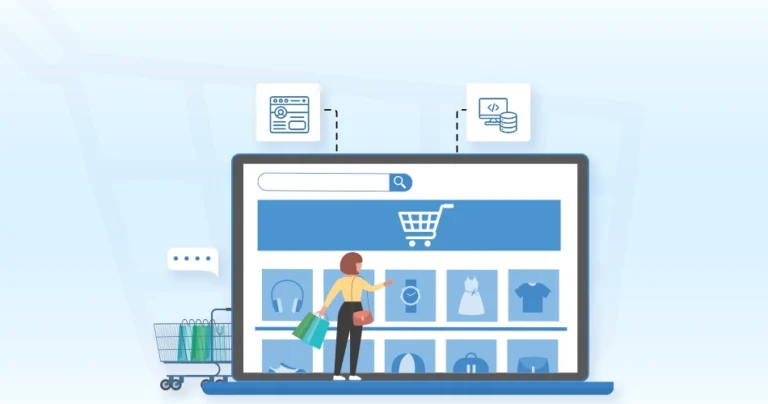
Headless commerce is an eCommerce architecture. It separates the frontend (what customers see) from the backend (where the data and logic are managed). A Headless approach helps ensure faster, more flexible, and highly customizable shopping experiences.

Brands adopt headless to improve site speed, support multiple channels, personalize experiences, scale globally, and integrate best-of-breed tools. It helps businesses move faster and stay competitive. These benefits drive growing demand for professional Headless Commerce development services.
A Headless architecture can help you deliver personalized and consistent shopping experiences across multiple touchpoints. It also allows faster adaptation to market changes, improves website speed, and makes operations more efficient through easier integration with other systems.
Yes. Headless suits B2B well because it makes complex needs like customer-specific pricing, bulk ordering, account logins, and approval workflows easier to build. Since the frontend is separate from the backend, you can update the design or add a buyer portal without touching your core system. You can also run a public catalog, a private buyer portal, and a sales rep app from a single backend.
Many US B2B firms already do this. One of North America’s largest equipment rental companies built a headless store that lets customers reserve equipment from any device. A major industrial supplier uses a headless setup to show personalized catalogs and pricing to different customer groups from one system.
Want this for your business? Our B2B eCommerce development team can help.
Yes. Headless works well for B2C too, because it makes your store fast and flexible. Quick page loads keep shoppers engaged and support SEO, and you can update the design or run sales and campaigns without slowing the site down. It also lets you sell across many channels, such as your website, mobile app, and social media, all from one backend.
Many B2C brands already use it. A direct-to-consumer furniture brand moved to headless after quickly outgrowing its old platform. A large beverage company runs several brand sites from a single headless backend, giving each brand its own look while keeping operations simple.
Want a fast, flexible store like this? Our B2C eCommerce development team can help.
The timeline to build a Headless Commerce solution depends on the level of complexity, the integrations needed, and the customization requirements. It can be developed over a few weeks to several months, depending on the project scope. Hiring an expert Headless Commerce development company will help you set clear deadlines and ensure on-time delivery.
Yes, Headless Commerce can help improve your website’s SEO. Faster pages support better Core Web Vitals scores, and you get greater control over content, metadata, and structured data. The results depend on how the store is built. Server-side rendering makes pages easier for search engines to crawl, and a replatforming project needs proper redirects to protect your existing rankings.
There is no fixed cost for implementing Headless Commerce. It depends on the platform, level of customization, number of integrations, and development resources. Ongoing costs, such as platform subscriptions, hosting, and third-party tool licenses, also add to the total. Consulting with a Headless Commerce development services provider can provide an estimate tailored to your specific business needs.
Yes, you can integrate your current systems and tools into the Headless setup. You can connect your ERP, CRM, payment gateways, and shipping providers to ensure smooth and synchronized operations across your business. PIM, OMS, and POS systems can also be linked through APIs, which keep product data, orders, and in-store sales in sync.
To get started with Headless Commerce, first evaluate your business needs and future vision. Partner with a reliable Headless Commerce development company, choose a suitable tech stack, and plan for scalability to ensure your solution grows with your business.
There’s no one-size-fits-all option. Popular choices include Next.js, Nuxt, and Astro, often paired with commerce platforms like Shopify or Salesforce. The best framework depends on your scale, integrations, SEO needs, and performance goals. Your team’s existing skills also matter, since Next.js is built on React and Nuxt is built on Vue.
Traditional platforms combine the frontend and backend in one system, which means a design change often requires backend work too. Headless Commerce separates the two layers and connects them through APIs. This gives you more design freedom, faster updates, better performance, and omnichannel delivery.
No. A Headless CMS uses APIs to deliver content, but also includes tools for workflows, localization, media management, and permissions. Most Headless eCommerce development services combine a CMS with a commerce backend to power multiple digital touchpoints.
Look for a team with proven headless projects, API and CMS expertise, and integration experience. The company should also focus on SEO and performance and offer ongoing post-launch support. A reliable Headless eCommerce development company should design scalable architecture, not just build storefronts.