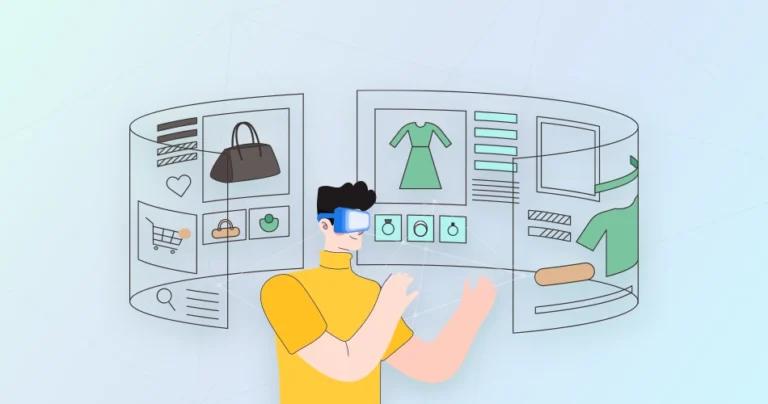
Online shopping has made life easy. Almost anything can be ordered from home in just a few clicks. But there is still one big problem that it does not feel real. Clothes cannot be tried on, furniture cannot be placed in a room, and products cannot be experienced before buying.
But virtual reality eCommerce is beginning to fix this issue. It lets people explore products in a more real and interactive way. Instead of just looking at images, shoppers can step into a virtual store experience, walk around, and see products as if they were actually there. This kind of shopping experience is making online buying feel more natural and closer to real-life shopping.
In this blog, the focus will be on how virtual reality for eCommerce is changing the way people shop, the benefits it offers, and how businesses are using it in real life. Let’s begin
What is Virtual Reality in eCommerce?
Virtual reality in eCommerce is a shopping experience that lets people enter a digital world and interact with products as if they were in a real store.
Instead of just scrolling through images on a screen, shoppers use a VR headset or even a mobile device to step into a virtual store experience. This space places products in a 3D environment. People can walk around, look at items from different angles, pick them up, and explore them more closely. Shoppers can experience a product in a more lifelike way.
For example, in virtual reality online shopping, a person can enter a digital clothing store, move between racks, and view outfits as if they are physically present. In a furniture store, they can explore a full room setup and see how different items are arranged together. The goal is to make the digital space feel as real as possible.
Virtual Reality vs. Augmented Reality
When talking about modern technology, AR and VR in eCommerce often come up. Both are changing how people shop, but they work in very different ways.
The easiest way to understand this is simple:
- Augmented Reality (AR) adds digital elements to the real world.
- Virtual Reality (VR) replaces the real world with a completely digital one.
In virtual reality shopping, the user enters a fully digital space. It could be a showroom, a mall, or a branded VR store experience. Everything around is computer-created.
On the other hand, augmented reality keeps the real world visible. It simply adds digital objects on top of it. For example, while using a phone, a person can place a virtual sofa in their living room or see how a pair of glasses looks on their face.
Both technologies are part of eCommerce virtual reality trends, but they solve different problems. Below are the key differences across various aspects:
- Shopping Environment: AR works in the real world by adding digital elements. VR creates an entirely new world where shopping happens. This is why the virtual store experience feels more immersive in VR.
- Devices Used: AR typically runs on smartphones or tablets, making it easy for most people to use. VR requires a headset, which creates a more profound shopping experience but is still less common among everyday users.
- Level of Experience: AR provides partial experience by enhancing what is already around. VR offers full virtual shopping experiences where everything is designed to feel like a real store.
In simple terms, AR brings products into the real world, while VR takes people into a new world built for shopping. So, if you want to implement these technologies in your eStore, hire eCommerce web developers to do it for you.
Benefits of VR in eCommerce
Virtual Reality eCommerce is not just about new technology. It solves real problems that people face while shopping online. It makes the experience more natural, clearer, and more engaging. Below are the most important benefits explained in a simple way:
More Real and Immersive Shopping
One of the biggest advantages of virtual reality shopping is how real it feels. Instead of looking at flat images, shoppers can walk through a virtual store, explore products, and interact with them.
This kind of VR shopping experience feels closer to visiting a physical store, which makes online shopping more enjoyable.
Better Understanding of Products
In traditional online shopping, it is difficult to fully understand a product. With virtual reality in eCommerce, products are shown in 3D. Shoppers can view them from every angle and see small details clearly.
This is how virtual reality enhances product content. It turns simple images into real-like experiences that are easier to understand.
Higher Confidence Before Buying
Many people hesitate before buying online because they are unsure about the product. Virtual reality shopping reduces this doubt. When shoppers can explore products in detail or even try them virtually, they feel more confident about their decisions. This often leads to fewer returns and better satisfaction.
Interactive and Engaging Experience
Scrolling through product pages can feel boring. But virtual shopping experiences are different. They are interactive and keep users engaged for longer. People can move around, explore, and discover products in a way that feels natural. This makes the entire virtual reality shopping experience more memorable.
Strong Brand Experience
Brands using VR eCommerce can create unique digital stores that stand out. A well-designed VR store experience leaves a lasting impression on customers. This helps businesses build a stronger connection with users and stay ahead in a competitive market.
Shop Without Limits
Physical stores have limitations such as location, space, and operating hours. Virtual reality for eCommerce removes these limits. Anyone can visit a virtual store experience from anywhere in the world, at any time. This helps businesses reach more customers without needing a physical space.
Useful Customer Insights
Another important benefit of eCommerce virtual reality is the data it provides. Businesses can see how users move inside a store, what they look at, and what they interact with. This helps improve products, store design, and overall shopping experience over time.
Boost in Sales and Customer Loyalty
When people feel confident and enjoy the shopping process, they are more likely to buy. A smooth and engaging virtual reality shopping journey often leads to higher conversions and repeat customers.
In short, the advantages of virtual reality in eCommerce go beyond just visuals. It improves how people explore, understand, and connect with products. It makes online shopping feel much closer to real life. If you’re planning to boost customer engagement and sales with VR-enabled stores, consider partnering with an experienced eCommerce web development company.
How Virtual Reality eCommerce Helps Improve Shopping Experience
Traditional online shopping is convenient, but it still lacks the personal touch of a physical store. Customers can’t feel fabrics, try on clothes, or see how furniture fits in their space. Virtual reality eCommerce changes that by making shopping more interactive, engaging, and lifelike.
Social Shopping in a Virtual World
Shopping has always been a social activity. In physical stores, people shop with friends, seek opinions, and make decisions together. Virtual reality for shopping brings this element online by enabling social commerce in a virtual world.
Customers can visit virtual stores with friends, interact with other shoppers, and chat with sales representatives in real-time. Some brands even host virtual events where users explore new product launches, participate in Q&A sessions, and engage in shared virtual shopping experiences. This makes online shopping feel interactive and less isolated.
Seamless Integration with Augmented Reality for a Hybrid Experience
While VR shopping experiences fully immerse users in a virtual environment, augmented reality enhances the real world by overlaying digital objects. Many retailers combine AR and VR to create hybrid experiences.
For example, a shopper might use AR to see how a piece of furniture would look in their home, then enter a virtual reality store to explore different styles or colors. Platforms like IKEA Kreativ make it easier for customers to make confident buying decisions by visualizing products in both real and virtual spaces.
Improved Customer Service in Virtual Stores
Providing top-quality customer service online is challenging. With virtual reality for eCommerce, brands can offer real-time guidance inside virtual stores. AI-powered chatbots or virtual assistants help customers navigate product options, answer questions, and provide styling recommendations.
Some retailers even combine VR with live assistance, where real sales associates guide shoppers remotely. This ensures customers receive the same level of support they expect in a physical store.
In short, virtual reality in eCommerce enhances online shopping by offering interactive, immersive, and personalized experiences. Customers can explore virtual shopping experiences, interact with products in real time, receive tailored recommendations, and enjoy engaging, social VR store experiences from the comfort of their homes.
Major Brands That Have Implemented VR eCommerce
Some of the top brands have already introduced VR functionality. They are letting their users experience how the products feel in real life. Below are some of them:
- Walmart uses VR to train employees and simulate store scenarios, making learning faster and more engaging.
- Amazon offers virtual try-ons for shoes and Amazon Explore Travel, letting customers experience locations and shop at the same time.
- Alibaba created the Tmall Luxury Pavilion, a 3D luxury shopping platform with avatars, virtual try-ons, and interactive events.
These examples show that VR eCommerce is not limited to experimentation; it is delivering real results across industries.
Wrap It Up
Virtual reality is quickly transforming the eCommerce industry. It is offering a new level of interaction that goes beyond the traditional online shopping experience. From creating immersive virtual stores to enhancing product visualization and customer service, VR helps businesses give personalized experiences to shoppers. It makes shopping more engaging.
While adopting VR technology requires investment and planning, the benefits are significant. These include improved customer satisfaction, increased brand awareness, and higher sales. As VR continues to evolve, it will shape the future of shopping. It will make shopping more interactive, exciting, and customer-centric.
If you want to give a better online shopping experience with VR technology to your customers, reach out to us today for a consultation!
FAQs on Virtual Reality eCommerce
1. Can VR eCommerce be used for all types of products?

Yes, VR eCommerce can be used for a wide range of products, from fashion to furniture, electronics, and even real estate. It’s especially useful for products that require detailed visualization or personal interaction, like clothing try-ons or viewing how furniture fits in a room.
2. Do I need a VR headset to shop in virtual stores?
Not necessarily! While a VR headset provides the most immersive experience, many virtual stores are accessible via mobile phones or computers using simpler, browser-based VR experiences. This allows a wider range of customers to enjoy the benefits of VR shopping.
3. How can VR improve customer service in online shopping?
VR can enhance customer service by offering virtual assistants or live chat with real customer service representatives within the virtual store. This allows for real-time assistance, helping customers find products, get recommendations, and resolve issues while shopping.