Email remains one of the few marketing channels that can get you $36 in revenue on every dollar spent. In eCommerce, that return climbs even higher. Many online stores generate a large share of their sales from email alone, without increasing ad spend. That makes email marketing in eCommerce very essential.
Yet, most eCommerce brands struggle to see these results. Their emails go unopened, promotions get ignored, and there are no repeat orders. The problem isn’t the channel; it is the lack of a personalized lifecycle strategy. Without proper segmentation, timing, and intent, even the best offers won’t work.
In this blog, we’ll discuss how email marketing builds sustainable revenue and covers proven tactics that boost ROI. Let’s dive in!
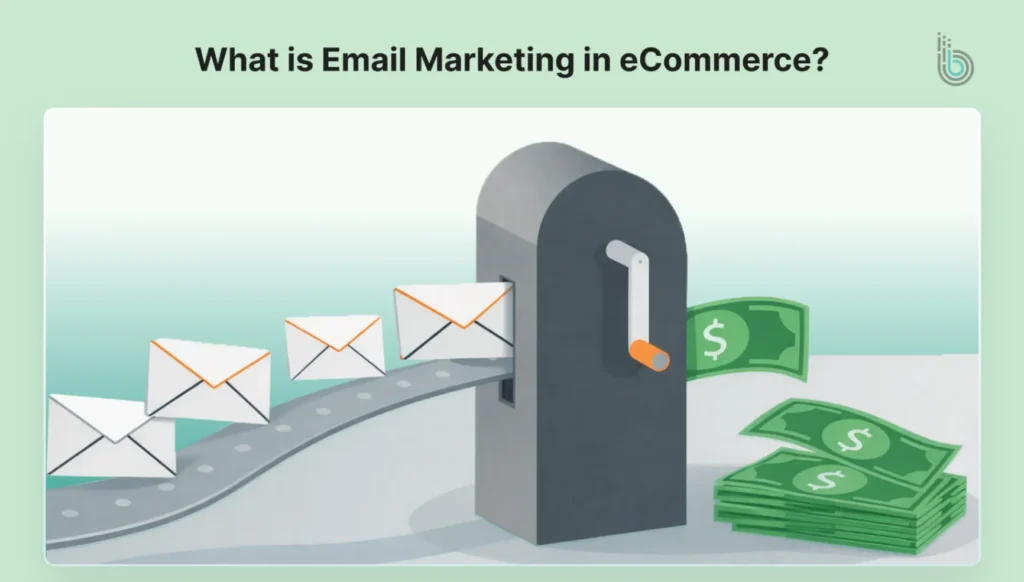
What is Email Marketing in eCommerce?
Email marketing in eCommerce is the practice of using email to guide shoppers from first interest to repeat purchase. It is about sending the right message at the right moment, based on when a customer interacts with your store. Do it right, and email will become a direct sales channel.
For online stores, email connects every stage of the buying journey. It helps recover lost carts, confirm orders, and predict future purchases based on behavioral data. Unlike ads, email reaches people who already know your brand. That makes email marketing for eCommerce one of the most reliable ways to drive revenue and long-term customer value.
Types of Email Marketing in eCommerce
Different emails serve different goals. To build a successful eCommerce email marketing strategy, keep that goal in mind.
Promotional Emails: These emails highlight discounts, limited-time offers, and new product launches. Their goal is to drive immediate sales and push buying decisions.
eCommerce Newsletters: Newsletters focus on value. They don’t try too hard sell. They share updates, tips, product stories, or brand news to keep your store top of mind.
Welcome Emails: Sent when someone signs up, welcome emails introduce your brand and set expectations. They often deliver the highest open rates of any eCommerce email.
Abandoned Cart Emails: These emails remind shoppers about items left behind in their cart. They are critical to recovering lost revenue and improving checkout conversion rates.
Customer Re-engagement Emails: Re-engagement email campaigns target inactive subscribers. The goal is to restart interest before the customer forgets your brand entirely.
Onboarding and Drip Email Campaigns: These emails educate new customers over time. They explain products, answer common questions, and help shoppers get more value after signing up or making a purchase.
Holiday and Event Emails: These emails tie your offers to key moments, such as seasonal sales or major events. Timing and relevance matter more than heavy discounts here.
Ratings and Review Emails: Sent after a purchase, these emails ask customers to share feedback. They build trust, improve future sales, and support better product decisions.
Simply put, email marketing is one of the top eCommerce marketing strategies that increases your revenue. Using the right type of email will help recover lost sales and boost conversion. They improve engagement and help get repeat orders.
Why Email Marketing Matters for Online Stores?
Email marketing supports the entire customer journey rather than a single stage. It helps you attract new shoppers, turn interest into sales, and build lasting relationships after the purchase. No other channel works as steadily across all three phases. That’s why email marketing in eCommerce remains a core revenue driver for online stores.
Acquisition: Turning Visitors into Subscribers
Email helps you capture interest before a sale happens. When a visitor joins your list, you get a chance to continue the conversation. Email list building for eCommerce is highly effective. Instead of relying on one-time traffic, you create a growing audience you can reach again. Every new subscriber becomes a future sales opportunity.
Conversion: Guiding Shoppers to Buy
Email supports buying decisions when shoppers hesitate. Timely messages reduce doubt, answer questions, and bring people back to complete their purchase. With clear intent and smart sequencing, eCommerce email campaigns move customers from browsing to checkout. Email consistently outperforms social and paid ads in driving conversions.
Retention: Creating Repeat Customers
Most eCommerce revenue comes from repeat buyers. Email keeps your brand top of mind after the first sale. Thoughtful follow-ups, relevant updates, and well-timed offers improve trust. Retention emails increase customer lifetime value and reduce dependence on ads.
Email fits perfectly into your broader digital marketing stack. Ads and social media attract attention, but email turns that attention into revenue. Unlike other platforms, email doesn’t get affected by changing algorithms.
How to Build an Effective eCommerce Email Marketing Strategy
For an email marketing strategy to be effective, the focus should be on sending quality emails rather than sending more emails. A structured system is needed that consistently turns subscribers into paying, repeat customers.
Set Campaign Goals
Every email needs a clear outcome. Goals give direction to your eCommerce email campaigns and help you measure what truly works. Without defined goals, even good emails lose impact.
Increase email-driven sales or repeat purchases.
Improve open and click-through rates.
Recover lost revenue from abandoned carts.
Boost customer lifetime value.
Understand the Audience
Knowing your audience helps you send relevant emails. Leverage Zero-Party Data (information customers share via quizzes or polls) to build deeper segments. Analyze audience behavior rather than relying on assumptions.
Segment users by purchase history.
Track browsing and engagement patterns.
Identify loyal vs inactive customers.
Personalize based on intent and interest.
Pick an Email Marketing Tool
Choose from the leading email marketing tools to support automation, segmentation, and reporting without making the process complex. They will help with:
Easy campaign and workflow setup.
Real-time data sync with your store.
Built-in analytics and reporting.
Advanced automation triggers based on customer lifecycle stages.
Choose the Type of Campaign
Each email should match a stage in the eCommerce marketing funnel. Purpose-driven campaigns with the right timing are very useful. Below are some common ones:
Welcome and onboarding emails.
Abandoned cart emails.
Post-purchase and product recommendation emails.
Re-engagement email campaigns.
Create Engaging Content
Content is the most important part of the email. It decides whether users read or ignore your email. The language should be clear and have a strong intent to drive action. Focus on:
Simple, curiosity-driven subject lines.
Value-focused copy addresses the customer’s needs rather than just pushing a sale.
Clear call-to-action.
Relevant visuals or product highlights.
Make It Mobile-Friendly
Most users read emails on their phones. If the design is not optimized for mobile, there will be fewer clicks and conversions. Use:
Short paragraphs and a clean layout.
Single-column design.
Large, tappable CTA buttons.
Fast-loading images.
Use Automation
Automation ensures the right message goes out at the right time. Predictive flows can now send “Restock” emails before a customer even realizes they are running out of a product. They generate 30x the returns of one-off campaigns. It keeps eCommerce customer engagement consistent without manual effort. Automate:
Welcome and lifecycle email marketing flows.
Cart and browse abandonment triggers.
Post-purchase email flows.
Time-based promotional emails for online stores.
Perform A/B Testing
Always test one variable at a time (like subject lines or button colors) to ensure the customer doesn’t encounter any problems. If everything works as supposed, the chances of conversion increase. Focus on:
Testing subject lines and previewing text.
Comparing CTAs or layouts.
Experimenting with send times.
Applying learnings to future campaigns.
Monitor Performance
Tracking results shows what drives revenue and what needs fixing. Check key metrics regularly to make email a predictable sales channel. Monitor:
Open and click-through rates.
Conversion and revenue per email.
Bounce and unsubscribe rates.
Campaign-wise performance trends.
Maintain a Clean Email List
The email list should prioritize quality over quantity. Maintain the list to ensure emails are sent to recipients with a high probability of conversion. Remove emails with no chance of conversion. It improves deliverability and long-term ROI. Make sure to:
Remove inactive subscribers.
Use double opt-in for new users.
Run win-back emails before removal.
Avoid spam complaints and bounces.
When each step, starting from goal setting to organizing the email list, is handled with intent, email stops being just another marketing task and becomes a dependable revenue engine for your online store.
If you’re ready to build a high-performing email system for your store, choose our eCommerce consulting services to design a strategy that drives measurable growth.
Best Practices for eCommerce Email Marketing
Email marketing in eCommerce is built on discipline, relevance, and trust. Brands that perform well focus on sending better emails rather than more. Below are the best practices that consistently improve engagement, conversions, and long-term customer relationships.
Use Personalization
Personalization should feel thoughtful. Go beyond the “First Name” tag. Use dynamic blocks to show products that a customer recently viewed on your site. Emails should focus on what shoppers care about, as this helps capture attention and drive clicks.
Reference browsing behavior or recent views.
Share product recommendation emails based on past purchases.
Adjust offers by location, season, or shopping patterns.
Keep personalization subtle and context-aware.
Use Dynamic Content to Stay Relevant
Dynamic content allows a single email to serve multiple audiences. It changes what the shopper sees without changing the core message. This keeps emails fresh and timely.
Show different products to different segments.
Highlight region-specific promotions or inventory.
Adapt visuals and copy by customer type.
Improve relevance without increasing email volume.
Respect Privacy and Stay Compliant
If trust is lost once, it’s hard to recover. Ensure compliance with the latest 2026 data privacy standards (GDPR/CCPA updates). It signals credibility.
Collect clear opt-in consent before emailing.
Include an easy unsubscribe in every email.
Be open about how customer data is used.
Send only to engaged, permission-based lists.
Focus on Value Before Promotion
If every email pushes a discount, customers tune out fast. So, balance your promotions with educational content so customers don’t tune out.
Educate customers about the products they own.
Share practical tips or use cases.
Highlight customer stories or reviews.
Promote offers with clear, honest value.
Keep Brand Voice Consistent
Consistency builds familiarity and trust over time. So focus on:
Maintaining the same tone across all emails.
Aligning visuals with your website branding.
Avoiding sudden shifts in language or style.
Treat Deliverability as a Priority
No matter how good the emails are, it’s useless if they don’t reach the inbox. Deliverability protects your entire eCommerce email marketing strategy.
Avoid spam-heavy language.
Warm up new sending domains gradually.
Monitor bounce and complaint rates.
Clean lists regularly.
Metrics & KPIs You Should Track
For email marketing in eCommerce, the right metrics show how well your emails attract attention, inspire action, and generate revenue.
Open Rate: Open rate shows how many people found your email worth opening. It tells you how much the recipient trusts you and how effective your subject line was. Consistently low opens usually point to weak messaging or poor inbox placement.
Note:Privacy setting make this metrics less precise; focus more on Clicks.
Click-Through Rate (CTR): CTR measures how many readers clicked inside your email. CTR is the best indicator of whether your content and layout resonate with the reader. Higher CTRs signal relevant offers and clear intent.
Conversion Rate: This is the most important metric for eCommerce. It tracks how many readers completed a desired action, such as making a purchase. High conversion rates indicate your email matches shopper intent.
Bounce Rate: Bounce rate shows how many emails failed to reach inboxes. A rising bounce rate often signals list quality issues. Keeping this low protects deliverability and sender reputation.
Unsubscribe Rate: This metric reveals how your audience feels about your emails. A sudden spike suggests over-emailing or irrelevant content. Healthy unsubscribe rates help keep your list engaged and clean.
Revenue per Email (RPE): RPE shows how much money each email earns on average. It directly links email performance to revenue. For eCommerce brands, this metric defines true ROI.
Tracking these KPIs consistently helps you refine your eCommerce email campaigns, spot problems early, and focus on what drives growth. When metrics guide decisions, email becomes a predictable and scalable revenue channel.
Conclusion
Email marketing in eCommerce works because it supports the entire buying journey. It helps attract the right audience, guide purchase decisions, and build repeat business over time. With clear goals, well-timed campaigns, and relevant content, email becomes more than a channel. It becomes a steady source of revenue and customer trust.
Make sure to do the basics right, as it will help maximize impact. Smart segmentation, thoughtful personalization, automation with intent, and consistent performance tracking create long-term results. These will help you develop an eCommerce marketing strategy that delivers strong ROI and sustainable growth for your online store.
Want to turn your email campaigns into a reliable sales engine? Contact us to build a results-driven eCommerce email marketing strategy today.
FAQs on Email Marketing in eCommerce
Q1. Which is the best email marketing software for eCommerce?
It depends on the store size and needs. Platforms such as Klaviyo and Omnisend are well-suited for data-driven eCommerce email marketing. Mailchimp is well-suited for smaller stores just starting out. Choose software that supports automation, segmentation, and revenue tracking.
Q2. How to make sure emails don’t land in spam?
Spam issues usually come from poor list quality or aggressive sending. Use opt-in forms, avoid spammy language, and send only to engaged users. Keep your email list clean and warm up new domains slowly.
Q3. What are common mistakes to avoid in eCommerce email marketing?
Avoid sending too many emails, and don’t skip on segmentation. Don’t send the same message to everyone. Unclear subject lines and CTAs also affect the results. Do not treat email as a one-time promotional activity; it should be done regularly.