Sustainable E-commerce: A Way to Build a Future-proof Business
Quick Summary
In sustainable e-commerce, you sell products and services with minimal environmental impact. This blog focuses on building an e-commerce business with ethical sourcing, sustainable packaging, and more. But challenges like upfront costs, supply chain complexity, greenwashing, and operational inertia can make it harder. However, benefits like enhanced brand loyalty, reduced operational expenses, et. make it all worth it.
According to a recent survey, over 70% of consumers opt for brands focused on sustainability. With global warming and rapid environmental shifts becoming crises, they are more conscious about their purchases.
Sustainable e-commerce aims to reduce environmental impact and build a more modern consumer base for the brand. If your business wants to survive in the 21st century, sustainability in packaging, shipping, delivery, and other operations is a must.
So this blog gives you a detailed brief on sustainable e-commerce, including its features, benefits, execution, challenges, and more. Let’s start!
What is Sustainable E-commerce?
Sustainable e-commerce reduces environmental damage of an e-store operation using sustainable materials for packaging and optimizing the logistics. You can also offer refurbished (and recycled) products alongside new ones.
Different Approaches to Sustainable E-commerce
Eco-conscious Packaging: Eliminate wastethrough recyclable, compostable, or reusable e-commerce packaging.
Ethical Sourcing & Production: Source your products and materials from suppliers with fair labor practices. Highlight this fact on your products to show your commitment.
Circular Economy Principles: Create products that consumers can repair and recycle rather than repurchase. You can also promote take-back schemes to reduce scrap or garbage.
Carbon-Neutral Logistics: Invest in renewable e-commerce logistics like electric delivery trucks and make the delivery routes more efficient and streamlined.
Transparent Operations: Openly communicate sustainability objectives and initiatives to the customers.
These are just a few approaches to making an e-commerce business more sustainable. But how does it benefit the business and its consumers? Let’s take a look.
Why Sustainability Matters for Modern E-commerce Businesses
With the current trends pointing towards conscience with convenience, adopting sustainable practices is a necessity for every business. Making the business operations environmentally and socially-responsible is a part of the future of e-commerce.
Key business benefits include:
Lower Operational Costs: With optimized packaging, more efficient logistics, and waste reduction, you can cut costs in shipping, materials, and energy.
Improved Investor & Stakeholder Appeal: Eco-friendly practices show a business is innovative and responsible. That’s a business the investors and partners would rather deal with.
Improved Brand Loyalty: More and more customers are choosing brands that share their values and beliefs. Hence, brands that show genuine dedication will earn deep, lasting trust.
Competitive Advantage: Commitment to sustainability helps you stand out in a crowded market. The ever-increasing group of conscious, responsible consumers will prefer it over others.
Future-proofed Supply Chain: Sustainability will create resilient, ethical, and efficient supply chains. So the company will be able to avoid expensive risks like resource scarcity and changing environmental laws.
Online businesses that switch to eco-friendly practices for their products and operations usually win customers’ trust and build long-term market presence. That’s why sustainable e-commerce is an indispensable model for the new modern businesses.
But why do consumers prefer sustainable brands and products over other alternatives?
Why Do Consumers Prefer Sustainable E-commerce?
Nowadays, young buyers are well aware of the broader consequences of their purchases. Thus, sustainability has become a dominant factor in their buying journey. It has radically transformed how the consumers judge a brand and spend their money.
Alignment with Personal Values: Modern consumers are more likely to purchase from brands that align with their beliefs. So for some, the purchase is going to be a symbol of their values.
Perceived Quality & Trust: Consumers like the brands involved in ethical production and are open about their business practices. They think the brand offers a superior-quality, safer product, which in turn makes it more reliable.
Social Influence: Sustainability is more than just an eco-friendly lifestyle choice. It has become a social norm, gaining popularity by the day.
Emotional Reward: Buying a sustainable brand is usually associated with a “feel-good” factor. It makes the buyer feel that they are part of a good global movement.
Long-term Value: Products built on the Circular Economy (innovative production, responsible consumption, and regenerative practices) are regarded better over time.
Sustainable e-commerce provides future-proof, ethical products and a shopping experience. If you want to build a well-perceived e-commerce website for your enterprise, get our professional eCommerce website development services.
But how do you ensure these benefits? Is there a process or specific practices to adopt?
Ways to Build a Sustainable E-commerce Business
Building a sustainable e-commerce business is a continuous process of improvement that begins with core, impactful changes. There are a few actionable strategies that can adapt your business for a sustainable future.
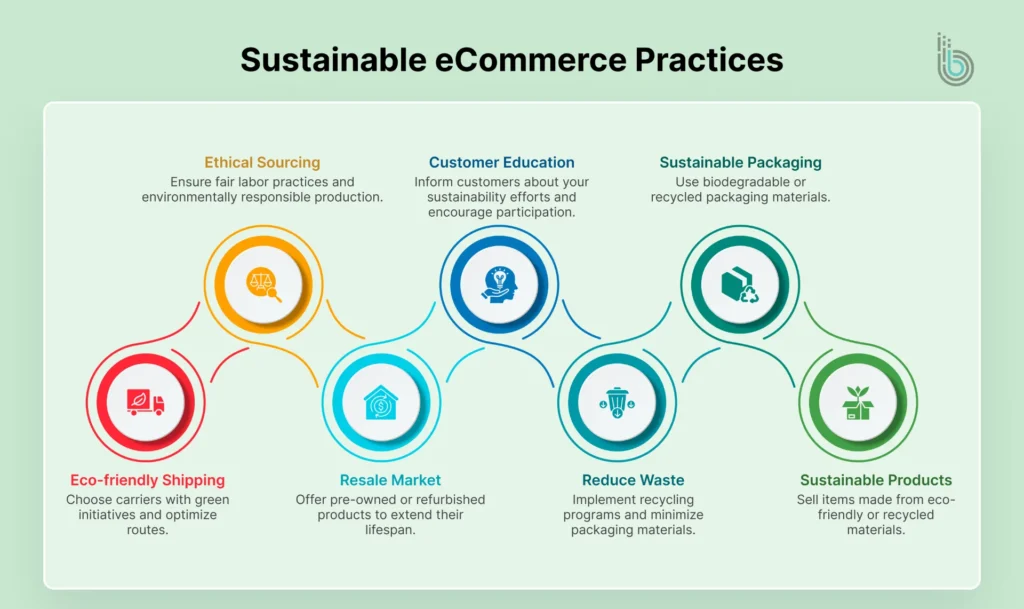
Eco-friendly Shipping
Adopt delivery methods that reduce carbon emissions, like:
Consolidated shipping
Optimized routes
Partnerships with carriers offering green transportation (like electric vehicles, bike couriers, etc.)
Try to encourage slower, low-impact delivery options; it can lower your environmental footprint while maintaining customer satisfaction and delivery speed.
Recycle & Reduce Your Waste
Implement systems that limit waste across operations. For that, minimize the returns and reduce excess inventory (go for just-in-time or JIT). You can also establish recycling programs for packaging and products. A small change can lead to a great impact if it is done cumulatively.
Ethical Sourcing & Supply Chain
Ethical product sourcing means your sustainability efforts start long before the shipment arrives. Suppliers who manufacture responsibly, follow fair labor standards, and transparent sourcing.
A cleaner and organized e-commerce supply chain not only mitigates the environmental impact but also enhances the brand’s trustworthiness.
Use Sustainable Packaging
Sustainable packaging focuses on using materials that create less waste–they should be recyclable, compostable, or biodegradable. Reducing package size, avoiding excessive fillers, and adopting reusable mailers also help lower environmental impact.
Good quality eco-friendly packaging improves brand perception and cuts shipping costs while ensuring the product remains protected.
Leverage the Resale Market
Start a resale program, so the product lasts longer and new manufacturing requirements go down. Customers will appreciate the opportunity to either trade or sell back what they no longer want. That will make the brands not only support but also attract value-based buyers.
Resale initiatives can lead to new revenue streams while significantly reducing overall waste.
Sell Sustainable Products
Sell only eco-friendly products (or at least try to). These products should be made from either recycled, ethically-sourced, or low-impact materials. That makes your brand serious about the sustainability claims. Eco-conscious buyers like items such as organic textiles, refurbished electronics, or zero-waste essentials.
Good quality products will last longer and customers will buy them less frequently. These products may be expensive but it will lead to waste reduction and support your sustainability goals.
Educate Your Customers
While sustainability is a trending topic, you still have to promote it well for everyone to participate. So guide the customers on using the product properly and recycling it after use. Blogs will be informative and using the free space on packaging boxes and bags can add a fun little twist.
With proper information, customers will become more responsible and follow sustainable practices.
If you want to implement the right practices for your business, get our eCommerce consulting services. We’ll analyze your business and adapt it to the sustainable practices.
But there are some challenges associated with it.
Challenges With Building a Sustainable E-commerce Business
While sustainability offers long-term benefits to businesses as well as consumers, there are still some transitional challenges involved. A brand or business doesn’t become sustainable overnight. You need upfront investment, comprehensive operational changes, and complete transparency. That’s why even the best businesses are often hesitant about this shift.
Higher Upfront Costs
You will need some initial financial investments in sustainable materials and ethical certifications. These will be the backbone of your sustainable operations.
How to Solve It?
Rather than an expense, consider sustainability as a capital investment in the future of your business. Its long-term ROI in branding and customer loyalty will be much higher.
Supply Chain Complexity
Shifting from your regular suppliers to new ones offering ethical sourcing can be a bit of a hassle; it means additional layers of coordination.
How to Solve It?
Before the partnership, you will need to verify their supplier practices and analyze them on key environmental metrics. Start by partnering up with a few vetted suppliers, even if that means fewer products in your catalog.
Greenwashing Accusations
Sometimes, vague claims of “eco-friendly” and “sustainable” without proof can backfire. They can trigger lasting reputational damage.
How to Solve It?
Make sure to acquire all necessary certifications and share specific data on every claim. If there are any ongoing challenges, inform your customers about it. It shows you are transparent about your successes and failures.
Consumer Willingness to Pay
While sustainability has become “trendy”, not all consumers are ready to spend a premium on green products. Some customers still want cheaper, more cost-effective options, even if their environmental footprint is much larger.
How to Solve It?
With this hurdle, all you can do is communicate the value of your product beyond its “sustainability”. Try to focus on the product quality, ethics, and brand story to justify the premium prices.
Operational Inertia
You can’t “go green” just like that. Operations that have existed and gone on for years can’t be changed overnight. You have to adopt new operational overhauls that are more environmentally friendly. Plus the employees (especially the older ones) might be hesitant to change.
How to Solve It?
Try to start with a single, high-impact product and promo campaign. Make sure to communicate all necessary details to the employees before the campaign execution. It shows tangible benefits and builds internal advocacy.
So, want help ensuring the best results while evading these challenges? Then hire eCommerce developers with us.
Final Thoughts
Establishing a sustainable e-commerce business is quite a task, yet it is a necessary requirement. From the ethical procuring of materials to the transparent handling of logistics and educating the consumers, you need to execute a range of key tasks.
There may be issues like upfront costs and supply chain complexities. But managing them effectively will make your business future-proof. That means efficiency in product sourcing and shipping and reduction in wastage. It makes the operations more responsible.
Want help with building an advanced yet sustainable e-commerce website? Then connect with us today!
FAQs on Sustainable E-commerce
1. What is the simplest way to start making my e-commerce business sustainable?
The first step is a packaging audit. Adopting a recycled, plastic-free packaging is the most basic sustainability requirement. You can reduce waste and, sometimes, shipping costs. Plus, a good quality sustainable packaging gives your customers a story worth telling.
2. How can I avoid greenwashing and prove my sustainability claims?
Rather than using nonsensical terms like “eco-friendly”, be specific and honest. Provide verifiable data and evidence like “packaging made of 100% post-consumer recycled paper”. Support your claims with popular third-party certificates (such as B Corp, Fair Trade, or FSC).
3. Can a small business afford to be sustainable?
Certainly, there are various actions that depend on or necessitate investments. However, the majority of such actions result in cost-saving while being eco-friendly.
Eco-friendly packaging, fewer returns, and better energy efficiency in the warehouse are the company’s contributions to reducing its ecological footprint.
4. What is a Circular business model in e-commerce?
The circular business model, or Circular Economy entails innovative production, responsible consumption, and regenerative practices. It’s different from the traditional “take-make-dispose” linear model. You can also create and sell products designed for easy disassembly and recycling. The aim is to create a closed-loop system.