Thousands of new entrepreneurs turn to Shopify dropshipping every year because it offers low risk and quick entry into eCommerce. There is minimal investment, as no inventory or warehouse is required. On paper, it appears to be the perfect online business model. Yet most stores shut down within months. The reason is poor execution.
Many beginners don’t understand what Shopify dropshipping is beyond the surface definition. They rush into product listings, copy competitors, and run ads without a solid plan. Learning how to dropship on Shopify properly means building a system. It includes choosing the right niche, working with reliable suppliers, pricing that aligns with market expectations, and creating a store that feels trustworthy from the first click.
In this blog, we’ll discuss how to set up dropshipping on Shopify the right way. This Shopify dropshipping guide will help build a store that lasts, scales, and earns consistent results. Let’s start.
What is Shopify Dropshipping?
Shopify dropshipping is a retail model that does not carry inventory. You sell products through a Shopify store. A third-party supplier ships orders. The seller never stocks the goods. When a customer pays, the order moves to the supplier. They pack and deliver it directly.
Shopify handles the storefront and checkout. Suppliers manage storage and shipping. Profit comes from the difference between the supplier’s and the seller’s prices. Over 6.8 million websites run on Shopify today. Around 12% of those stores use dropshipping for at least one product. This proves that dropshipping with Shopify is not a trend; it is a structured commerce model.
Pros and Cons of Shopify Dropshipping
Pros
Low startup cost
No warehouse needed
Easy-to-test products
Simple store setup
Flexible location freedom
Cons
Lower profit margins
High supplier dependency
Shipping delays possible
Strong market competition
Limited brand control
Simply put, Shopify is one of the best eCommerce platforms for dropshipping. This retail model lets you sell products through an online storefront while a third-party supplier handles all inventory and shipping. It offers low startup costs and location flexibility, though it requires navigating tight profit margins and high market competition.
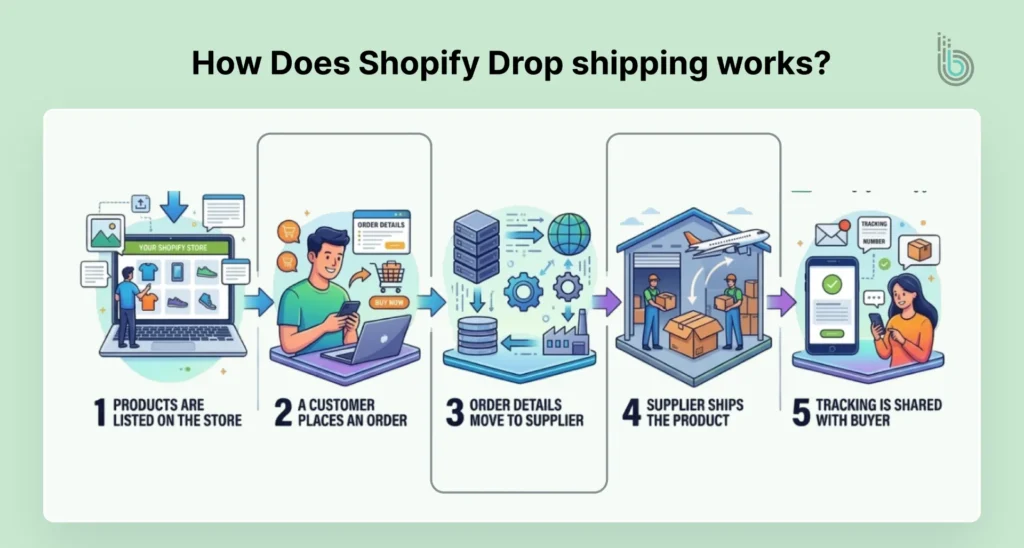
How Does Shopify Dropshipping Work?
Shopify dropshipping runs on coordination. The store owner sells. The supplier fulfills. Shopify connects both sides through automation.
Below is how the system works:
1. Products are Listed on the Store
The seller displays supplier products. Photos and details appear branded. Inventory stays with the supplier.
2. A Customer Places an Order
The buyer completes checkout. Payment goes to the store owner. Shopify records the order instantly.
3. Order Details Move to the Supplier
The order is forwarded automatically. Supplier receives product and address data. You don’t have to pack the order and ship it.
4. Supplier Ships the Product
The supplier packages the item. Shipping labels are created. The product ships to the customer.
5. Tracking is Shared With the Buyer
Tracking details sync back to Shopify. The customer receives shipping updates. Delivery happens under your brand name.
The seller controls pricing and marketing. The supplier handles storage and logistics. This is how dropshipping with Shopify works, with clear roles and a clear flow. If you need help setting up a Shopify dropshipping store, hire Shopify developers to assist you.
Shopify Dropshipping vs Traditional eCommerce
Both models sell products online, but they operate very differently. Understanding these differences helps you choose the right path before investing time or money.
Key Aspect
Shopify Dropshipping
Traditional eCommerce
Inventory Management
No stock held by the seller. Supplier manages inventory.
Seller purchases and stores inventory.
Startup Risk
Low upfront investment. Fewer financial risks.
Higher risk due to bulk buying and storage costs.
Profit Margins
Margins are usually thinner. Supplier cost is higher.
Better margins with wholesale pricing.
Fulfillment Responsibility
Supplier handles packing and shipping.
Seller manages packing, shipping, and returns.
Speed to Launch
Fast setup with ready suppliers.
Slower due to sourcing and inventory setup.
Operational Control
Limited control over shipping and quality.
Full control over branding and logistics.
Scalability Style
Easy to test many products quickly.
Scaling needs storage and logistics expansion.
How to Dropship on Shopify?
Starting a Shopify dropshipping store is not difficult, but doing it correctly makes a big difference. Below are the detailed steps to help even beginners understand the process and avoid common mistakes.
Step 1. Create Your Shopify Account
Everything begins with setting up your Shopify store. Go to Shopify’s website, start the free trial, and enter basic details such as your email, password, and store name. Choose a name that is easy to spell and memorable. A complicated name creates confusion and weak branding from day one.
After signing up, Shopify asks a few questions about your business experience. These questions help you adjust your dashboard; they do not limit anything. Once inside the admin panel, go to Settings to set up the foundation of your store, including business address, contact details, payout account, and currency.
Next comes trust-building. Connect a custom domain instead of using the default “myshopify” link. A proper domain instantly makes your store look legitimate. After that, set up basic store policies, including shipping, returns, and privacy. These pages reduce customer hesitation and prevent disputes later.
Step 2. Choose a Profitable Niche
Most new sellers fail here because they chase trends instead of choosing a clear niche. A niche is not just a category; it is a focused market with specific buyers. Examples include fitness accessories, home organization tools, pet gadgets, and travel essentials. Customers trust a specialist more than a generalist.
A good niche solves a real problem or creates excitement. Products should have visible value. People should understand the benefits quickly. Research demand using tools such as Google Trends, social media searches, and marketplace listings. If demand stays consistent over time, the niche is safe.
Profit margin is equally important. Many beginners choose low-ticket items with limited room for advertising and marketing. A healthier approach is to choose products that allow at least twice the sourcing cost. Evergreen products often outperform seasonal trends because they sell year-round.
Step 3. Find Reliable Suppliers
Suppliers control product quality, shipping speed, and customer satisfaction. Even a perfect store will struggle with poor suppliers. This step deserves patience and careful selection.
AliExpress Alternatives
AliExpress is popular for its wide product selection and low prices, but it is not the only option. Platforms like Spocket and Modalyst offer more vetted suppliers and often provide more reliable shipping. These tools also integrate seamlessly with Shopify, saving time on product imports.
US/EU Warehouses
For US-focused stores, warehouse location matters. Suppliers with US or EU warehouses ship faster, reducing refund requests and improving customer trust. Delivery speed is a major factor in repeat purchases, especially for American buyers who expect quick shipping.
Print-on-Demand Suppliers
Print-on-demand works well when custom branding matters. Products such as t-shirts, mugs, and phone cases are printed only after a customer places an order. This model removes inventory risk and allows unique designs. It is ideal for creators or niche brands seeking originality without upfront costs.
Private Agents
Private sourcing agents become useful once sales grow. They negotiate better prices, check product quality, and sometimes consolidate shipping. Beginners may not need agents immediately, but understanding this option early helps when scaling.
Before choosing any supplier, check ratings, reviews, and communication speed. Reliable response time often predicts how smoothly orders will be handled. Strong supplier relationships reduce problems before they reach your customer.
Step 4. Install Dropshipping Apps
Shopify improves significantly when automation is added. Dropshipping apps connect your store with suppliers and reduce manual work. Without them, managing products and orders becomes a hassle.
Product Importing Tools
Dropshipping apps allow one-click product imports. Titles, images, prices, and descriptions sync directly into your store. Still, never publish products as they come. Edit titles for clarity. Rewrite descriptions in simple language. Good listings feel curated, not copied.
Order Automation
Automation saves time and prevents mistakes. When a customer places an order, the app automatically sends the order details to the supplier. This reduces manual processing and speeds fulfillment. Automation is especially important once daily order volume grows.
Pricing Sync
Supplier prices change often. Pricing sync tools automatically update your store when costs rise or fall. This prevents selling at a loss. It also protects margins without constant manual checks.
Inventory Alerts
Nothing hurts trust more than selling out-of-stock items. Inventory alerts notify you when stock levels drop or when items become unavailable. Quick action helps avoid refund requests and negative reviews.
Choose apps carefully. Too many apps slow the store. Pick tools that fulfill actual needs, not unnecessary features.
Step 5. Add & Optimize Products
Adding products is easy. Optimizing them is where real selling begins. A product page should answer questions.
Start with clear product titles. Avoid long supplier-style names. Use simple words that explain what the product does. High-quality images matter more than fancy words. Customers decide visually before reading details.
Product descriptions should focus on benefits, not just features. Explain how the product improves daily life. Use short paragraphs and bullet points for clarity. Add shipping information, estimated delivery time, and basic guarantees to build confidence.
Pricing must feel reasonable but profitable. Include enough margin to cover advertising and unexpected costs. Also consider perceived value, as prices that appear too low can reduce trust. A well-optimized product page increases conversions without extra traffic.
Step 6. Design Your Shopify Store
Store design influences buying decisions. A clean design creates trust, while a confusing design pushes visitors away. So don’t focus on decoration; focus on clarity.
Shopify offers strong free themes that work well for beginners. They are clean, fast, and mobile-ready. Paid themes provide more customization and advanced layouts, but they are not required at the start. Simplicity usually converts better.
Trust elements reduce buyer fear. Add secure checkout icons, payment logos, and clear return policies. These small visual cues help visitors feel safe when making purchases.
A good layout naturally guides the customer.
Keep menus simple
Use clear categories
Place important information where eyes naturally move
Product benefits, price, and the buy button should be easy to find
Avoid cluttered pages filled with distractions
Most shoppers browse on mobile devices. Test spacing, font size, and image loading speed. Buttons should be easy to tap. A store that works perfectly on phone screens usually performs better overall.
Design is not about style alone. It is about making buying feel effortless. When visitors feel comfortable, conversions increase without extra effort.
Step 7. Set Up Payments, Taxes & Shipping
This is an important step because it controls how money flows through your store. If you rush here, you might face payment holds or shipping confusion later. A clean setup prevents future problems.
Start with payment providers. If your audience is in the U.S., Shopify Payments is usually the simplest option because it supports major cards and keeps checkout smooth. Adding PayPal is also smart. Many customers prefer it for buyer protection. The key is to offer buyers familiar payment options without complicating checkout.
Next comes taxes. Shopify allows automatic tax calculation based on location. Configure this correctly from the beginning so pricing stays transparent. Incorrect tax settings create accounting issues later.
Shipping settings are also important. Define shipping zones based on your planned sales locations. For US-focused stores, set clear delivery areas and simple rates. Many stores choose free shipping because it increases conversion, but the cost should already be included in pricing. Also, create clear policy pages covering shipping, returns, and refunds so customers know what to expect.
Step 8. Test Orders Before Launch
Before launching, place a complete test order. It will highlight the problems that are invisible inside the dashboard. Test the process as a real buyer would, from the product page to checkout confirmation.
Check if the payment flows correctly
Confirm order emails are sent
Verify shipping rates display properly at checkout
Test both desktop and mobile experiences since most visitors will use phones
Review product pages, loading speed, and navigation clarity
Small friction points discovered here can save future sales. Also, verify that the order is delivered to the supplier correctly. Ensure tracking information updates and customer notifications work as expected. A smooth test order means your system is ready for real customers.
In short, you set up a Shopify store by choosing a niche, integrating automation apps with reliable suppliers, and optimizing your product pages. Success requires a clean mobile design, clear shipping policies, and a successful test order to ensure the payment flow works. If you need expert assistance with all these tasks, partner with a Shopify development company.
Shopify Dropshipping Costs & Profit Breakdown
Shopify dropshipping is not expensive, but there are costs that determine whether the business makes money or loses it. Understanding the numbers early helps you price smarter and avoid surprises.
Shopify Subscription: The monthly plan cost is your base expense. It runs every month, even without sales. Choose a simple plan at the start.
Domain Name Cost: A custom domain instantly builds trust. It is usually paid annually. It is a small cost with strong branding value.
Dropshipping App Fees: Many apps offer free tiers. But advanced automation usually needs upgrades. Expect monthly app expenses over time.
Product Sourcing Cost: This is what you pay suppliers. Cost varies by niche and supplier. When listing your products on your site, consider this cost and always leave room for a profit margin.
Shipping Charges: Some suppliers include shipping in the price, while others charge separately per order. So, factor shipping into the product price.
Payment Processing Fees: Payment gateways take small percentages. This fee applies to every transaction, so include this in profit calculations.
Marketing and Advertising: These are the biggest expenses for growth. Ads drive traffic to new stores. Budget carefully to avoid overspending.
Branding and Design Extras: Logo tools or premium themes add to the cost. These are optional but useful for credibility. You can start with free options and upgrade later.
Profit Breakdown (How Money is Made)
To understand how dropshipping can generate profits, analyze the revenue flow.
The customer pays the retail price
Supplier cost is deducted first
Platform and payment fees come next
Advertising costs reduce the final margin
The remaining amount becomes profit
Real profitability comes from smart pricing, controlled ad spend, and reliable suppliers. When you manage the cost efficiently, dropshipping is one of the most profitable eCommerce business ideas.
How to Scale a Shopify Dropshipping Business?
Scaling begins once the store has proven it can sell consistently. The goal shifts from driving sales to building stability, speed, and higher profits.
Automate Daily Operations
Using automation will help remove repetitive work. Use tools for order routing, pricing updates, and tracking sync. With less manual work, there will be fewer errors. It will help save time, allowing it to be invested in growth.
Upgrade Supplier Quality
To keep your customers coming back, you have to tackle slow shipping before it kills your retention rates. Switch to reliable suppliers early in your process, prioritizing those with US or EU-based warehouses to reduce transit times. By ensuring faster delivery, you’ll build trust that leads to glowing reviews and a loyal following.
Focus on Winning Products
Focus on scaling what already sells well rather than constantly diluting your brand with random new additions. Increase inventory depth for proven products to ensure you have the stock to meet demand. Let data guide your decisions to ensure every move is backed by performance.
Improve Profit Margins
Prioritize negotiating better pricing with your suppliers to lower your base costs. You can further drive revenue by bundling products to increase average cart value and gradually raise prices as demand rises. Even small, strategic adjustments like these can compound, using efficiency and smart pricing to deliver significantly higher profits.
Strengthen Branding and Store Trust
Build a branded store that consistently outperforms generic setups by converting more visitors into loyal buyers. You can achieve this by implementing consistent visuals and clear messaging across your site. Refine product pages and customer support to deliver a seamless experience. It will foster the trust necessary to reduce refund rates and improve market presence.
Build Marketing Systems
Focus on retargeting past visitors and buyers to capitalize on the audience you’ve already built. Implement automated email flows to drive repeat sales, and regularly test multiple ad creatives to ensure your messaging stays fresh and effective. Successful scaling is a byproduct of consistency and data-driven iteration.
Watch Customer Experience
Track delivery times and customer complaints to catch and resolve issues before they escalate. Prioritizing the post-purchase experience ensures happy buyers, who in turn drive organic growth through word-of-mouth. In this business, your reputation compounds over time, making early intervention the key to long-term success.
Monitor Performance Data
Take the time to study your conversion rates and identify which pages are performing best. Scaling traffic should occur only after your funnel is fully optimized, to avoid wasting budget on a leaky bucket. By letting data guide your decisions, you protect yourself from blind spending and ensure every dollar is optimized for maximum ROI.
If you want to scale in dropshipping with Shopify, don’t focus on adding new products. Build smoother systems, stronger supplier control, and a customer experience that keeps sales growing effortlessly.
Common Shopify Dropshipping Mistakes to Avoid
Most Shopify dropshipping stores do not fail because the model is bad. They fail because small mistakes pile up early. Avoiding these errors saves money, time, and endless frustration.
Choosing Products Without Research: Selling random items fails; verify existing demand and data-backed trends before listing.
Copying Supplier Content Directly: Avoid duplicate supplier text; rewrite generic titles and descriptions in clear, human language to build trust.
Ignoring Supplier Reliability: Test suppliers first to avoid the slow shipping and poor quality that trigger refunds and complaints.
Poor Store Design: Prioritize simple, clean layouts over cluttered ones to reduce bounce rates and build professional trust.
Weak Pricing Strategy: Balance profit margins with perceived value to avoid killing profits or scaring off potential buyers.
Launching Without Test Orders: Perform test orders to catch broken checkout flows and technical issues before real customers arrive.
Depending Only on Paid Ads: Reduce reliance on unstable paid ads by building email lists and focusing on multi-channel growth.
Ignoring the Mobile Experience: Ensure fast, seamless mobile pages, as most modern shoppers browse on their phones.
Adding Too Many Apps: Limit third-party apps to maintain fast loading speeds and high conversion rates.
Expecting Instant Results: Treat the venture as a real business; prioritize patience, testing, and consistency over instant results.
Avoiding these mistakes helps keep your Shopify dropshipping business stable and profitable. Most success comes not from doing extraordinary things but from avoiding ordinary errors early.
Closing Lines
Shopify dropshipping works when the basics are done right. Success comes from choosing a clear niche, working with dependable suppliers, setting realistic pricing, and building a trustworthy store. Don’t take shortcuts. Focus on strong setup, clean execution, and consistent attention to customer experience.
Long-term growth depends on understanding costs, protecting margins, avoiding common mistakes, and scaling only after the foundation is stable. When operations are automated, products are selected based on logic, and branding is professional, dropshipping with Shopify becomes far more predictable and sustainable.
Want a Shopify dropshipping store built the right way from day one? Contact us today to create a store that grows and profits.
FAQs on Shopify Dropshipping
Q1. Is Shopify dropshipping still worth it?
Yes, Shopify dropshipping is still worth it when done properly. Profit comes from choosing the right products and understanding real demand. Strong market research and smart pricing make a big difference. Good marketing and clear branding are what keep stores profitable long-term.
Q2. Can I make $10,000 per month dropshipping?
Yes, but it requires serious work and discipline. Stores that reach $10,000 monthly treat dropshipping as a real business, not a side experiment. Success depends on strong marketing, reliable products, and reinvesting profits into growth. Scaling ads, improving branding, and solid customer service are usually the deciding factors.
Q3. Why do so many Shopify stores fail?
Most stores fail because they chase quick wins instead of building a strategy. Poor marketing, weak branding, and wrong product choices stop growth early. Many underestimate ad costs and launch without a clear plan. Low trust, poor product pages, and bad customer experience quickly kill conversions.