Most people think that selling online is really simple. List your products, run some ads, and wait for orders. But actual growth is never that easy. Behind every successful online store is a system that handles products, pricing, marketing, inventory, and customer experience. That system is called eCommerce management.
The competition is intense, and customer expectations are high. Even a single delayed shipment or a broken checkout can cost you loyal buyers. At the same time, the market continues to expand. As of now, 33% of people shop online. By the year 2028, more than half of the world’s population aged 14 and older will be shopping online.
The opportunity is massive, but only brands with strong eCommerce operations and clear management processes will scale sustainably.
So, what is eCommerce management, and how do successful brands use it to grow without losing control? In this blog, we’ll discuss eCommerce site management, daily eCommerce operations, and the role of an eCommerce management system. Let’s dive in.
What is eCommerce Management?
eCommerce management is the process of running and controlling an online store in a smart, organized way. It covers everything that keeps your store active and profitable. This includes listing products, updating prices, managing inventory, handling orders, and improving the customer experience.
It also includes planning and decision-making. You track sales, study customer behavior, improve your website, and fix weak points in your eCommerce operations. The goal is smooth site management, steady growth, and fewer costly mistakes. Businesses can use an eCommerce management system or hire eCommerce developers to handle this work professionally.
Why is eCommerce Management Important?
eCommerce management brings order to operations and gives you control over how your business runs every day. Below are some key reasons why it’s important.
Creates Structure in Daily Operations: eCommerce store management helps you handle inventory, orders, returns, and customer queries without confusion. You don’t have to guess anything, as it builds a repeatable system.
Improves Website Performance: Regular eCommerce site management keeps your store up to date, fast, and easy to use. By studying customer behavior, you can fix weak pages and improve checkout flow.
Guides Smarter Marketing Decisions: With proper eCommerce management practices, you can see what products sell, who buys them, and why. These insights help you shape better campaigns and stop wasting ad spend.
Boosts Productivity: An efficient eCommerce management system automates routine tasks like stock updates and order tracking. This frees up your team from these tasks and gives them more time to focus on strategy and growth.
Protects Your Competitive Edge: eCommerce website management helps you deliver better service, faster delivery, and a smoother shopping experience than competitors.
Increases Profitability: Good management reduces operational costs, improves pricing control, and lifts conversion rates. Over time, this leads to steady, sustainable profits.
Helps You Adapt to Change: Online markets shift fast. Effective management allows you to respond quickly to trends, demand spikes, and customer feedback.
eCommerce management is not a one-time setup. It is a long-term commitment to improving your store’s operations. When you manage your online business with clarity and discipline, growth becomes predictable.
Detailed Breakdown of the eCommerce Management Process
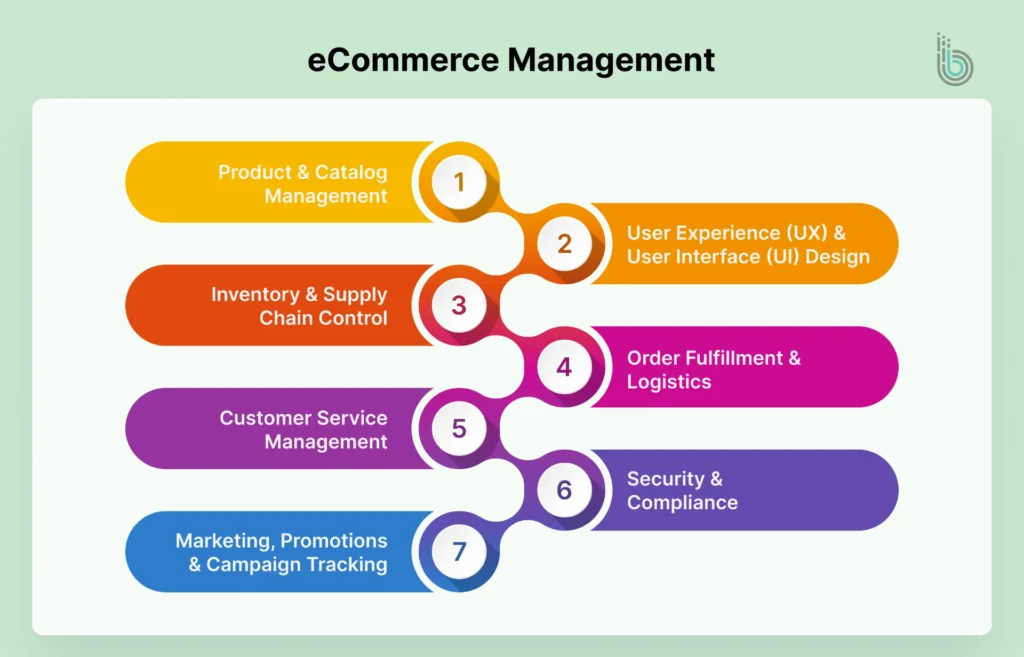
eCommerce management is a set of systems that work together. To ensure your store runs smoothly, every part of this system must work as supposed.
Product & Catalog Management
This is the foundation of your eCommerce site management. It includes adding products, writing clear descriptions, setting prices, managing categories, and updating images. A well-structured catalog helps customers quickly find what they need.
It also improves search visibility and conversion rates. Good catalog management ensures your listings stay accurate, consistent, and aligned with demand.
User Experience (UX) and User Interface (UI) Design
Your website must feel simple and intuitive. UX focuses on how easily customers can browse, search, and check out. UI controls the layout, design, buttons, and visual clarity.
Clean design reduces friction and increases trust. Good eCommerce website management consistently tests navigation, page speed, and mobile performance to remove barriers to sales.
Inventory & Supply Chain Control
Inventory issues can be expensive in many ways. Overselling damages trust, while overstocking locks up cash. Effective eCommerce operations track stock levels in real time and connect with suppliers to prevent stockouts and delays. An organized system helps forecast demand, manage vendors, and keep fulfillment steady even during peak seasons.
Order Fulfillment & Logistics
Once an order is placed, speed and accuracy matter. Fulfillment includes picking, packing, shipping, and tracking. Clear processes reduce returns and customer complaints. Many growing brands use eCommerce operations services or a third-party logistics partner to streamline this stage. The goal is simple, deliver the right product on time, every time.
Customer Service Management
Customer support builds loyalty. Fast replies, easy return policies, and transparent communication create confidence. eCommerce store management includes setting up help desks, chat support, and automated updates. When service is consistent, customers return and refer others. Poor service, on the other hand, spreads quickly in reviews.
Security & Compliance
Online businesses handle sensitive data. Payment details, addresses, and personal information must stay protected. Strong eCommerce management includes secure payment gateways, SSL encryption, fraud detection, and regulatory compliance, including data privacy laws.
Businesses must ensure regulatory compliance with data privacy laws, such as the General Data Protection Regulation (GDPR) in the European Union and the California Consumer Privacy Act (CCPA) in the United States. These regulations mandate transparency, explicit user consent, and the right for individuals to access or delete their personal data.
Marketing, Promotions & Campaign Tracking
Traffic without a strategy wastes money. Marketing management includes paid ads, email campaigns, SEO, and promotional offers. But the real value comes from tracking results. An advanced eCommerce management platform provides analytics on traffic, conversion rates, and customer behavior. This allows you to refine campaigns and invest where returns are strongest.
Simply put, eCommerce management integrates product control, customer experience, operations, and marketing into a single system. When each function works together, growth becomes structured, measurable, and sustainable.
Ready to streamline your operations and scale your sales? Explore professional eCommerce management services to streamline your store’s growth.
eCommerce Operations & Management Best Practices
For efficient eCommerce management, you need discipline, clarity, and constant improvement. These best practices help you run smarter eCommerce operations and create a shopping experience customers trust.
Build a Clean, User-Friendly Website: Keep your layout simple and clean. Define categories and use direct navigation so shoppers find products without confusion. A smooth browsing path improves engagement and supports better eCommerce site management.
Prioritize Mobile: Over 60% of total retail eCommerce sales happened on mobile devices in 2025. Your store must load fast and function perfectly on smartphones and tablets. Mobile friction kills conversions faster than anything else.
Reduce Page Load Time: Speed directly impacts revenue. A site that loads in one second converts far better than one that takes five. Optimize images, remove heavy scripts, and monitor performance regularly through your eCommerce management platform.
Use High-Quality Product Media: Clear, multi-angle photos build trust. Add videos or 360-degree views where possible. Since customers cannot touch the product, your visuals must close that gap.
Ensure Accessibility for All Users: Use readable fonts, strong contrast, and screen reader compatibility. Accessibility improves reach and protects your brand from compliance risks. Good eCommerce website management considers all user types.
Optimize Inventory with Real-Time Tracking: Use an eCommerce management system that updates stock automatically after each sale. This prevents overselling and ensures accurate operations. Smart tracking protects both cash flow and customer trust.
Use Data to Forecast Demand: Study buying patterns and seasonal trends. Analytics help you predict what will sell and when. This reduces dead stock and avoids missed revenue during peak periods.
Consider Flexible Supply Models: Dropshipping or supplier-direct shipping can reduce holding costs. It frees capital and reduces warehouse pressure. Choose the model that fits your scale and margins.
Personalize the Customer Experience: Show relevant product suggestions based on browsing and purchase history. Personalization guides users and makes the process easier. It increases average order value and repeat purchases.
Strengthen Customer Support Systems: Use live chat, CRM tools, and clear help channels. Respond quickly and proactively. Strong customer service management builds loyalty that advertising alone cannot buy.
Offer Transparent Shipping Options: Provide clear pricing, multiple delivery choices, and real-time tracking. Customers want visibility from checkout to doorstep. Hidden fees damage credibility.
Provide Flexible Payment Methods: Offer credit cards, PayPal, Apple Pay, and mobile wallets. Many shoppers abandon their carts when their preferred payment method is missing. Flexible payments reduce friction and boost completion rates.
Simplify Checkout and Account Management: Enable customers to securely save payment details and easily track orders. A fast, secure checkout process lowers cart abandonment and improves trust.
Adopt an Omnichannel Approach: Customers interact across websites, social media, marketplaces, and physical stores. Map their journey and ensure messaging remains consistent across all channels. Cohesive branding increases retention and customer lifetime value.
Keep Messaging Consistent Across Channels: Whether a shopper finds you on Instagram or your website, the tone and value should be consistent. Consistency strengthens recognition and credibility.
Effective eCommerce management is not about doing more. It is about doing the right things consistently. When systems, data, and customer experience align, growth becomes structured and repeatable.
eCommerce Management Challenges
eCommerce management comes with its own challenges. Growth brings complexity, and small gaps can turn into expensive problems. Below are the most common challenges online businesses face.
Cybersecurity Threats
Online stores handle sensitive data every day. Credit card details, addresses, and login credentials are prime targets for fraud. Many shoppers report risks like unauthorized charges and phishing scams.
A single breach can damage trust for years. Security measures such as SSL/TSL encryption, two-factor authentication, PCI DSS compliance, and visible security badges are essential. They are basic requirements.
Supply Chain Volatility
Supply chains are highly susceptible to disruption. Businesses still face raw material shortages, shipping delays, rising freight costs, inflation, and even port congestion. Rapid changes in demand make planning more challenging.
Brands selling across regions must also manage inventory in multiple locations. To reduce risk, diversify suppliers, stay in direct contact with manufacturers, and explore alternative shipping routes. AI-driven forecasting tools can also significantly reduce stockouts and lost sales.
Inventory Complexity
Tracking what sells and what sits idle is not simple. Overstocking locks up capital. Understocking sends customers to competitors. The challenge increases when inventory is spread across warehouses or multiple regions.
Selling on marketplaces and social platforms adds another layer of complexity. A strong inventory management system helps synchronize stock across channels and prevents costly errors.
Order Management at Scale
As sales grow, fulfillment pressure increases. Picking, packing, and shipping errors become more common. These delays lead to poor customer experience. An order management system (OMS) helps track orders from checkout through delivery.
Many brands partner with third-party logistics providers (3PL) to handle storage and shipping. This allows the business owner to focus on growth rather than daily fulfillment-related stress.
Building an Effective Marketing Strategy
Driving traffic to your eStore is not enough. The real challenge is converting visitors into buyers and retaining their loyalty. Marketing costs are rising, and competition is intense. Smart eCommerce operations require keyword research, competitor analysis, and careful campaign tracking.
Social media platforms like YouTube, Instagram, and TikTok offer reach, but you must measure the results. Building a first-party email and SMS list remains one of the most cost-effective ways to improve retention.
Competing in a Saturated Market
Millions of new online stores have launched in recent years. Standing out is difficult. Ad costs have also increased, and the margins have reduced due to price competition. Customers expect better service and faster delivery. To compete, brands must focus on niche positioning, strong branding, data-driven marketing, and memorable customer experiences.
Overall, eCommerce management is not just about running systems. Businesses need to work around these challenges while protecting growth. Adopting advanced solutions like headless commerce to improve flexibility or AI-driven dynamic pricing to stay competitive. The businesses that succeed are those that prepare in advance of crises.
eCommerce Management Future Trends and Direction
The future of eCommerce management depends on technology, data, and intelligent automation.
AI-Driven Automation
Artificial intelligence is now an essential part of eCommerce. The global AI market is projected to grow rapidly in the coming years, underscoring its deep impact on business operations. In eCommerce management, AI handles repetitive tasks like inventory updates, order routing, and basic customer queries. This reduces manual errors and frees teams to focus on strategy and growth.
Advanced Data Analytics
Modern eCommerce operations rely heavily on data. AI tools can process large volumes of customer behavior, purchase history, and campaign performance in seconds. This helps you identify patterns, predict demand, and refine pricing. It helps make evidence-based, precise decisions.
Smarter Demand Forecasting
Predictive analytics is improving supply chain control. AI models can anticipate seasonal spikes, regional trends, and product life cycles. This strengthens inventory planning and reduces stockouts or excess storage costs.
Personalized Shopping Experiences
Customers now expect relevance. AI allows eCommerce website management systems to recommend products based on browsing history and preferences. Personalized emails, offers, and search results increase engagement and repeat purchases.
AI-Assisted Content Creation
Generative tools are helping brands create product descriptions, marketing emails, and blog content faster. When used wisely, they support consistency in tone and improve SEO performance. Human review remains critical, but AI speeds up production.
Intelligent Customer Support
Chatbots and virtual assistants have become more capable. They resolve common queries instantly and operate 24/7. This improves response time while keeping support costs controlled.
Integrated eCommerce Management Platforms
Businesses are shifting toward unified eCommerce management systems that integrate inventory, marketing, analytics, and fulfillment into a single dashboard. This reduces tool overload and improves operational clarity.
The future of eCommerce management is automated and data-centered. Brands that adapt early will operate more smoothly, respond faster, and serve customers with greater precision.
Let our experts build a eCommerce management strategy for your store!
eCommerce management integrates product control, website performance, inventory planning, order fulfillment, marketing, and customer service into a single system. It makes eCommerce operations measurable, efficient, and scalable. The brands that have been successful online are not just creative. They are organized, data-driven, and operationally sorted.
To stay ahead of the competition, hire a dedicated eCommerce developer to implement high-level security and automation strategies into your daily operations.
FAQs on eCommerce Management
Q1. What skills are needed for eCommerce management?
Strong eCommerce management requires both technical and business skills. You need a clear understanding of eCommerce platforms and how automation tools work. Data analysis and conversion rate optimization are essential to improve performance. Marketing knowledge helps drive traffic and sales. Project management and communication skills keep teams aligned and operations smooth.
Q2. What are the 4 types of eCommerce?
The four core models are B2B, B2C, C2C, and C2B. B2B involves businesses selling to other businesses. B2C is when brands sell directly to consumers. C2C covers peer-to-peer marketplaces where individuals sell to each other. C2B allows individuals to offer products or services to businesses.
Q3. What are common eCommerce mistakes?
Many businesses fail because they do not fully understand their product or target audience. Choosing the wrong tech stack can slow growth and limit flexibility. Weak product pages with poor images or unclear descriptions hurt conversions. A confusing user experience drives visitors away before checkout. Small operational gaps often lead to major revenue loss.