Shopify Headless Development Services
Tired of Shopify theme limits? Our Shopify headless development services give you a lightning-fast storefront, complete design freedom, and a backend built to handle growth, so your store performs beautifully today and scales effortlessly tomorrow. Let’s build a store shoppers won’t forget.







Our Wide Range of Headless Shopify Development Services
We handle every layer of headless commerce, from custom builds to ongoing support. Explore our complete range of headless Shopify development services below.

Custom Shopify Headless Development
We design and build fully custom headless Shopify stores from scratch, tailored to your brand, workflows, and long-term business goals.

Shopify Hydrogen Development
Our team builds fast, dynamic storefronts using Shopify Hydrogen, Shopify’s own React-based framework built specifically for headless commerce experiences.

Next.js & React Shopify Development
We build custom storefronts using Next.js and React, giving you complete creative control over design, speed, and user experience.

Shopify Storefront API & GraphQL Development
Our developers connect your storefront to Shopify’s Storefront API, the data layer for custom builds, using GraphQL for fast, reliable delivery.

Headless Shopify Migration
We migrate your existing Shopify store to a headless setup without losing data, rankings, or functionality, ensuring a smooth transition.

Headless Checkout Integration
Our team integrates secure, high-converting checkout flows into your headless storefront, keeping the buying process quick, smooth, and reliable.

Headless PWA & Omnichannel Development
We build progressive web apps (PWAs), app-like websites, and omnichannel solutions, enabling customers to shop seamlessly across devices, platforms, and touchpoints.

Custom Marketplace Storefront Development
Our team develops custom multi-vendor marketplace storefronts on headless architecture, supporting complex catalogs, vendors, and transactions at scale.

Headless Shopify Maintenance & Support
We provide ongoing maintenance, updates, and technical support to keep your headless Shopify store secure, stable, and performing at its best.
Why Choose BrainSpate for Shopify Headless Development
We've spent years building decoupled Shopify storefronts, not just standard theme-based stores. Our team brings hands-on experience in headless architecture, custom APIs, and modern frameworks. With our custom Shopify solutions, you get focused expertise from a team that understands the complexities of headless commerce.



Pricing Plans Built Around Your Headless Store
Explore our pricing plans, packaged to suit a varying degree of headless Shopify development requirements.
10% Off
15% Off
Package Name |
|
|
|
|---|---|---|---|
Pricing | $800 / Month | $1,500 / Month | $2,700 / Month |
| Team Allocation | Pooled Developer | Semi-Dedicated Developer | Fully Dedicated Developer |
| Hours / Month | 40 | 80 | 160 |
| Website Maintenance | 5 Websites | 10 Websites | Unlimited Websites |
| Website Hosting Support |  | | |
| Design | Semi-Custom UI | Fully Custom UI/UX | Custom + UX Research |
| Mobile Optimization | | | |
| SEO Guidance |  | | |
| Third-Party Integrations | Basic Apps | ERP / CRM / API | Custom APIs |
| Performance Optimization | | | |
| Update Calls | Monthly | Weekly | Daily |
| Preferred Collaboration Tool | | | |
| Security Setup | Basic | Advanced | Enterprise-Grade |
| Best For | MVPs & Small Stores | Growing Brands | Large Enterprises |
 STARTER
 STANDARD
 ENTERPRISE
Different Service Models to Choose From
We offer flexible engagement models for headless Shopify development, so you can choose the setup that best fits your project.
Most Popular
Dedicated Model
Get a dedicated Shopify headless developer working exclusively on your project, ideal for long-term, complex, or ongoing development requirements.
Team involvementFull-time developer(s)
CommitmentOngoing
TimelineLong-term
Best For
Ready to Go Headless? Let's Build It.
Talk to our experts and get a clear roadmap for your headless Shopify project, tailored to your business goals.
Shopify Headless Development Tech Stack
BrainSpate houses dedicated Shopify headless developers skilled across modern frontend frameworks, including Shopify Hydrogen (Shopify's own toolkit for headless stores), backend systems, and Shopify APIs to power fast, flexible storefronts
Platform
 Shopify / Shopify Plus
Enterprise Systems
 SAP S/4HANA
 NetSuite (by Oracle)
 Akeneo PIM
Integration & Middleware
 Celigo
 APPSeCONNECT
 REST/GraphQL
 RabbitMQ
Data & Analytics
 Snowflake
 Looker Studio
 Datadog
 GitHub
Shopify Headless Development Life Cycle
Every headless Shopify development project follows a structured process. Here's how we take your store from initial discovery to a fully deployed, high-performing storefront.
Discovery & Requirement Analysis
We assess your business goals, Shopify setup, customer journey, and headless commerce requirements to define the project scope and SOW.
Headless Architecture & Technology Planning
Our team plans the headless architecture, frontend framework, Storefront API, CMS, hosting, and integrations. A project kick-off call aligns the team before development begins.
UX/UI Design & Storefront Planning
We create a flexible, conversion-focused storefront using a reusable component blueprint while maintaining controlled merchant flexibility across your headless experience.
Headless Storefront Development
Our developers build the custom storefront with Hydrogen, React, or Next.js and connect it to Shopify through GraphQL and Storefront APIs. Milestone-based development includes regular demo calls and feedback.
Integration, QA & Performance Optimization
We integrate third-party systems and validate the complete customer journey across devices and browsers. Structured QA, Core Web Vitals, SEO, security, and staging validation prepare the storefront for launch.
Deployment & Ongoing Support
After the final demo call, we deploy the approved storefront using controlled release and rollback procedures. Ongoing support includes monitoring, issue resolution, documentation and handover, plus monthly flexible maintenance or pay-as-you-go support.
Headless Shopify, Explained for Decision-Makers
Everything you need to know before decoupling your Shopify storefront, what headless commerce actually means, when it pays off, which technologies power it, what a build involves, and what it costs.
eCommerce businesses striving for rapid iteration and unique customer experiences often encounter limitations with traditional platforms. This is where Shopify Headless Commerce emerges, decoupling the front-end presentation from the back-end functionality.
By prioritizing API-driven architecture, businesses gain the flexibility to craft bespoke user interfaces across diverse touchpoints, from mobile apps to IoT devices.
In this blog, I’ll explain how Shopify experts create headless commerce sites and deliver seamless, omnichannel experiences, crucial for staying competitive. Let’s begin.
What is Headless Commerce?
Headless commerce represents a significant shift in how online businesses structure their eCommerce platforms. Here’s a breakdown:
Decoupling:
At its core, headless commerce involves separating the front-end (the “head”) of an e-commerce application from its back-end (the “body”). This means the presentation layer (what customers see) is independent of the underlying eCommerce functionality (order processing, inventory management, etc.).
API-Driven:
This separation is facilitated by APIs (Application Programming Interfaces), which act as communication bridges between the front-end and back-end. APIs enable data and functionality to be shared seamlessly between different systems.
Flexibility and Customization:
Headless commerce provides businesses with greater flexibility to create unique and personalized customer experiences across various touchpoints. This includes websites, mobile apps, social media, and even IoT devices.
Omnichannel Capabilities:
By decoupling the front-end, businesses can deliver consistent and engaging experiences across all channels, enhancing their omnichannel presence. In essence, headless commerce allows businesses to focus on creating the best possible customer experience without being constrained by the limitations of traditional, monolithic eCommerce platforms.
How Does Shopify Headless Work in Real Life?
Shopify Headless separates the front end and back end and connects them through APIs.
Shopify’s Back-end:
Shopify continues to manage the core eCommerce functions:
- Product information
- Inventory management
- Order processing
- Customer data
- Payment processing
The Storefront API:
This is the crucial link. It allows developers to access Shopify’s back-end data and functionality. Using the API, developers can pull product details, customer information, and process transactions.
The Head (Front-end):
This is where the flexibility comes in. Businesses can build custom front-end experiences using any technology they prefer (e.g., React, Next.js). This front-end can be a website, mobile app, or any other digital interface. The front end uses the Storefront API to communicate with Shopify’s back end.
The Process:
A customer interacts with the custom front-end. The front end uses the API to request data from Shopify’s back end. Shopify’s back end sends the requested data back to the front end. The front-end displays the data to the customer. This API-driven process allows you to create highly customized shopping experiences.
In simple terms, Shopify handles the “behind-the-scenes” operations, while you control how your store looks and feels to customers.
What Headless Connects To:
The same APIs that power your storefront can also connect to the other systems your business already runs on. Common integrations include CRMs for customer data, ERPs like SAP or NetSuite for order and finance workflows, and PIMs like Akeneo for managing large or complex product catalogs. For most businesses, this is the practical payoff of going headless: it’s not just a faster storefront; it’s a store that fits into the systems you’re already using instead of forcing you to work around platform limits.
So if you want headless operations for your Shopify store, choose our headless eCommerce development services.
How Do We Build Shopify Headless Commerce?
Creating a headless commerce setup with Shopify involves decoupling Shopify’s back-end (eg., product management, order processing) from its front-end.
Here’s how you implement Shopify headless commerce.
Step 1: Set Up a Shopify Store:
Sign up for a Shopify account on Shopify. Then configure your store with products, collections, payment gateways, and shipping settings. Make sure your store is ready to handle headless commerce by enabling the necessary APIs.
Step 2: Enable Shopify APIs:
Shopify provides APIs to interact with its back-end:
- Storefront API: For fetching product data, collections, and handling cart/checkout functionality.
- Admin API: For managing products, orders, and other back-end operations.
To enable these APIs, go to Settings > Apps and sales channels > Develop apps, then select Create an app. Configure the Storefront and Admin API scopes you need, then install the app to generate your API access tokens.
Step 3: Choose a Front-end Framework:
Select a front-end technology to build your custom storefront:
- Shopify Hydrogen, Shopify’s own React-based framework built specifically for headless storefronts, for teams that want a Shopify-native starting point.
- React, Vue.js, or Next.js for web applications.
- React Native or Flutter for mobile apps.
- Gatsby or Nuxt.js for static site generation.
Use Shopify’s Storefront API to fetch and display data.
Step 4: Build the Front-end:
Connect your front-end to Shopify using the Storefront API:
- Use GraphQL queries to fetch product data, collections, and other store information.
- Implement cart and checkout functionality using the Storefront API.
Use Shopify’s Buy SDK (JavaScript) for easier integration of cart and checkout functionality.
Step 5: Handle Checkout:
Use Shopify’s checkout API or Shopify-hosted checkout. For a fully custom experience, use the Storefront API to manage the cart and redirect users to Shopify’s checkout page. Alternatively, use Shopify’s Checkout UI Extensions to customize the checkout experience.
Step 6: Deploy Your Front-end:
Host your front-end on a platform like Vercel, Netlify, or AWS. Then optimize your site for performance and SEO.
Step 7: Test and Optimize:
Test your headless storefront thoroughly:
- Check for performance, responsiveness, and functionality.
- Make sure all API calls work correctly.
- Optimize for SEO and user experience.
Step 8: Go Live:
Once testing is complete, launch your headless storefront. Monitor performance and user behavior using analytics tools. Update your front-end and back-end regularly to ensure compatibility. Scale your infrastructure as your business grows.
If you need help with implementing the headless eCommerce model with Shopify, get our dedicated Shopify development services.
What Working with a Headless Shopify Partner Looks Like
The steps above describe the technical build. If you’re evaluating whether to bring in a development partner rather than build in-house, here’s what that engagement typically looks like from a business standpoint:
- Discovery and requirements
Your goals, current Shopify setup, and customer journey get mapped into a clear project scope before any development starts.
- Architecture and planning
The team selects the front-end framework, defines how the Storefront API and any third-party systems will connect, and confirms hosting and timeline.
- Design
A conversion-focused storefront design gets built around your brand, with room for you to review and adjust before development begins.
- Development
The storefront gets built and connected to Shopify’s APIs, usually with milestone check-ins so you can track progress without needing to understand the code.
- Testing and integration
The store gets validated across devices and browsers, along with performance, security, and SEO checks before launch.
- Launch and support
The storefront goes live, with a support plan in place for monitoring, fixes, and future updates.
Knowing this sequence up front makes it easier to scope a realistic budget and timeline when you start talking to vendors.
Closing Lines!
Headless commerce through Shopify addresses the growing demand for personalized shopping journeys. It enables faster development cycles and improved agility in response to market shifts.
By decoupling the front end from the back end, businesses gain the flexibility to craft unique, omnichannel customer experiences without being limited by a single platform’s front-end constraints.
So, whether you’re a large enterprise or a growing brand, explore Shopify headless to create a dynamic and responsive platform. For that, consult with our experts today!
Additional Shopify Services Offered by BrainSpate
Beyond headless development, we offer a full range of Shopify services to support your store at every stage. Whether you need a custom build, an app, or a new theme, our team can help.

Our team builds fully custom Shopify stores from the ground up, tailored to your workflows, catalog, and specific business requirements.

We build enterprise-grade solutions on Shopify Plus, supporting high-volume sales, multi-store setups, and complex B2B or wholesale requirements.

Our developers create custom private and public Shopify apps, extending your store's functionality to match your unique business workflows.

We design and build custom Shopify themes that reflect your brand identity, ensuring a responsive, conversion-focused shopping experience across devices.

Our team fixes the technical issues slowing your store down, optimizing code, images, and apps to improve load times across every page.

Shopify Consulting Service
Our team helps you plan the right strategy, audit your store, and make informed decisions before you build or scale further.

We connect your store with the CRMs, ERPs, and third-party tools your business relies on, so data flows smoothly across every system.

Our developers handle the full technical migration to Shopify, moving your products, data, and history over without losing traffic or rankings.
No Matter Your Industry, We've Got You Covered
From fashion and electronics to food and home goods, we build headless Shopify storefronts suited to your industry’s catalog, customer behavior, and buying patterns.


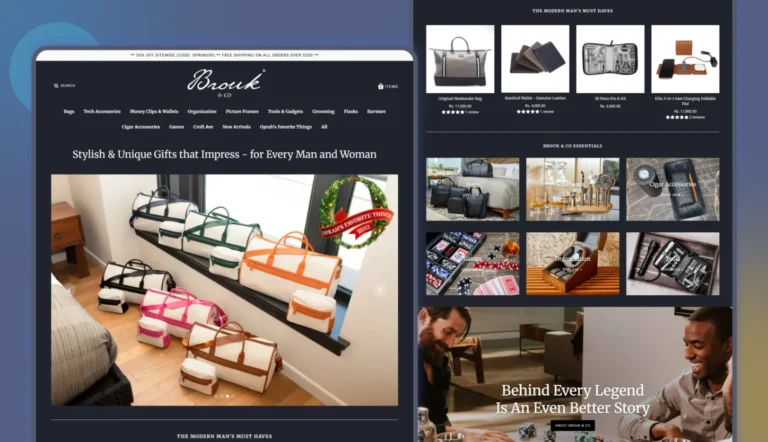
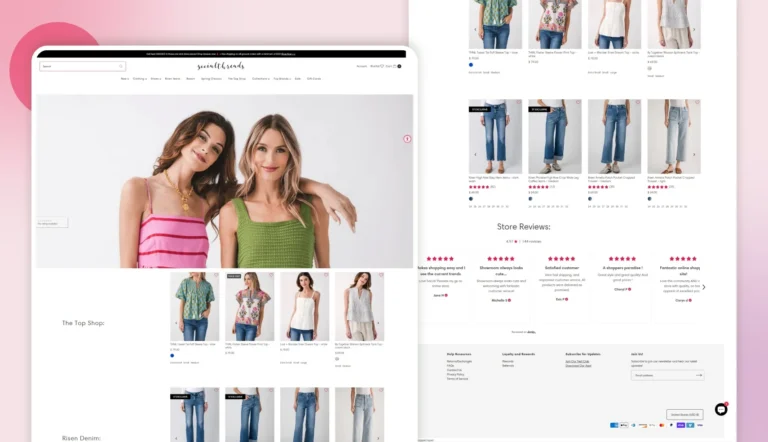
Results That Back Up the Promise
Explore real headless Shopify development projects where we've helped brands cut page load times, boost conversions, and build storefronts customers genuinely enjoy using.

Find the Right Shopify Services for Your Business
Headless Shopify gives you greater control over the storefront experience and technology stack. Consider complementary services for custom development, app solutions, integrations, Shopify Plus, performance optimization, and ongoing support.

Shopify Development & Support

Shopify Integrations & Migration

Featured In






The Verdict From People We've Worked With
Don't just take our word for it. Take a look at what our clients have to say about our eCommerce services.


A Smooth And Successful Collaboration
BrainSpate was a pleasure to work with. Their communication was excellent, they were open to feedback throughout the project, and they brought our creative vision to life on time. The collaboration was effortless, and the results exceeded our expectations.
Shehrish
Marketing Manager at Roof Tech

A Confident Marketplace Launch
Building our online jewelry marketplace would not have been possible without the support of BrainSpate's eCommerce experts. They helped define the right technology and core features, making the entire process smooth and reassuring from start to finish.
Raghav
Founder at BuyMyShine

Got Questions? We've Got Answers
Curious about headless Shopify development? Here's what most people ask us about timelines, technology choices, budgets, and what changes once your store is live.
1. What does headless Shopify actually mean?

Headless Shopify means separating your store’s frontend (what customers see) from Shopify’s backend (where products, orders, and payments are managed). You get a custom-built storefront using frameworks like React or Next.js, while Shopify still handles the backend. This gives you more design freedom and better performance.
2. Do I need headless Shopify development, or is a regular Shopify store enough?

If your current theme feels fast enough and meets your business needs, you may not need it yet. Headless makes sense if you need custom design freedom, faster load times, multi-channel selling, or complex integrations that standard themes can’t handle. We can assess your store and tell you honestly if it’s the right move.
3. How long does a headless Shopify project take?
Most headless Shopify projects take between 8 to 16 weeks, depending on complexity, integrations, and design requirements. A simple storefront rebuild takes less time, while enterprise-level projects with custom features and multiple integrations take longer. We’ll provide a clear timeline once we understand your requirements.
4. Will I lose my SEO rankings if I switch to headless Shopify?
Not if it’s done correctly. Our team preserves your URL structure, metadata, and content during migration, and headless sites often load faster, which can actually improve your rankings. We also run thorough SEO checks before and after launch to avoid traffic drops.
5. Can I still use my existing Shopify apps after going headless?
Some apps work as-is, while others need custom integration since they weren’t built for headless setups. Our developers review your current app stack and either integrate them via API or find suitable alternatives, so your store keeps the functionality it needs.
6. What technology do you use to build headless Shopify storefronts?
We build using Shopify Hydrogen, Next.js, React, or Vue, depending on your project’s needs, connected to Shopify through the Storefront API and GraphQL. We’ll recommend the best stack for your business after reviewing your goals, budget, and technical requirements.
7. Is headless Shopify development expensive?
It costs more than a standard theme-based store since it involves custom development. However, the investment often pays off through faster load times, higher conversions, and long-term flexibility. We offer a range of packages so you can choose one that fits your budget and business stage.
8. Can you migrate my existing Shopify store to a headless setup?
Yes, we handle full headless migrations without disrupting your live store, data, or customer experience. We map out your existing setup, plan the new architecture, and thoroughly test before switching over, so there’s no downtime or data loss.
9. Do I need a developer on my team to manage a headless Shopify store after launch?
Not necessarily. While headless stores involve more technical setup than standard themes, we provide ongoing maintenance and support plans, so you don’t need an in-house developer. We handle updates, fixes, and improvements as your business grows.
10. What happens to my Shopify admin after going headless?
Nothing changes on that end. You’ll still manage products, orders, inventory, and payments from your familiar Shopify admin. Only the customer-facing storefront changes, since it’s now custom-built and connected through Shopify’s APIs. Your day-to-day store management stays exactly the same.